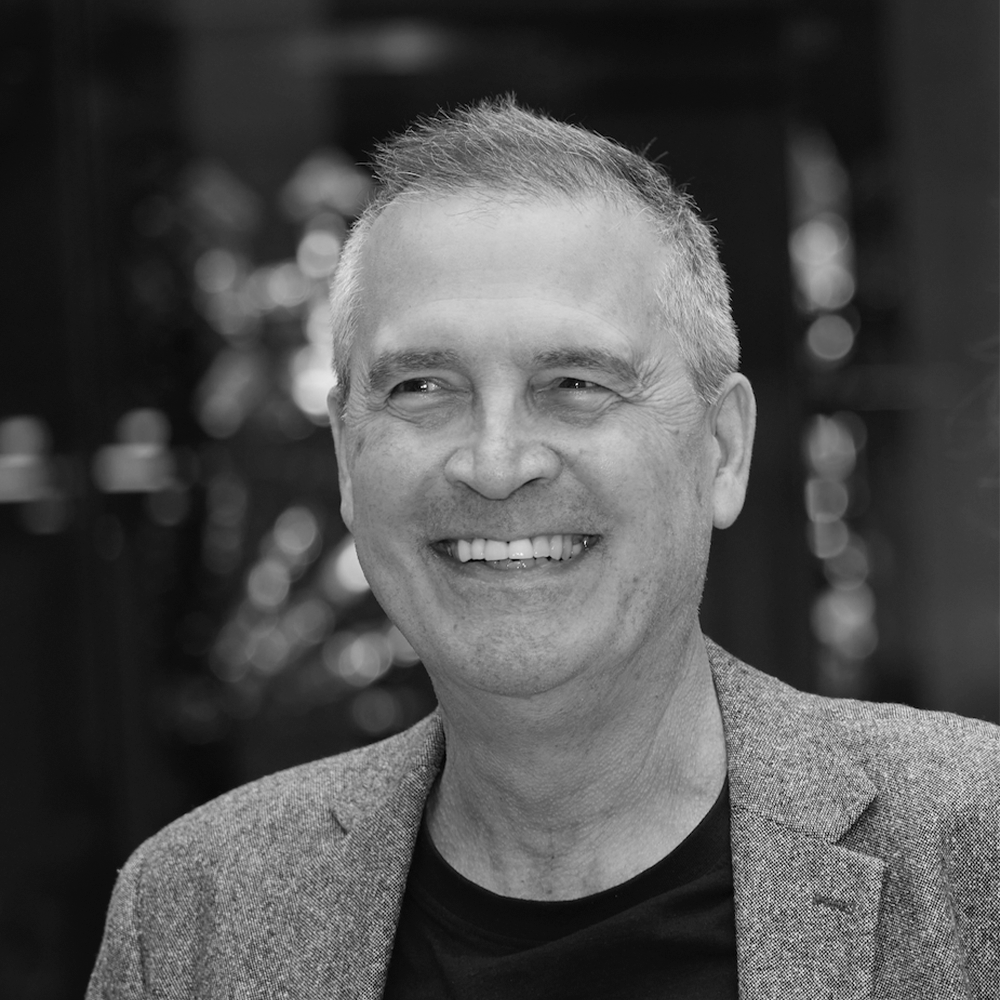
Prof. David Rowe
Emeritus Professor of Cultural Research, Institute for Culture and Society, Western Sydney University, with honorary positions at Bath, Beijing Foreign Studies and London Universities. An interdisciplinary social science and humanities scholar regularly contributing to (inter)national print, broadcast and online media, David’s latest book (co-authored) is Playing on the Edge: Sport, Society and Culture in Asia and Oceania (2026, Peter Lang).
Email: d.rowe@westernsydney.edu.au
LinkedIn: linkedin.com/in/david-rowe-7a090b15
Bluesky: @davidroweics.bsky.social
In 1968, when the Summer Olympics took place in Mexico City, the song ‘America’ was released by Simon & Garfunkel. It has been covered by many artists since, including once-Young American David Bowie at the famous sport and music venue Madison Square Garden during the post-September 11 Concert for New York City in 2001.
‘America’ is a haunting road song about searching for the soul of the USA, later co-host of the 2026 FIFA men’s World Cup. The musical journey begins with a hitchhike from the de-industrializing city of Saginaw, Michigan, home of the Saginaw Township Soccer Association. It ends on a Greyhound bus that left Pittsburgh and passed along the New Jersey Turnpike, coincidentally towards New York New Jersey Stadium, venue of this World Cup final.
Songwriter Paul Simon’s ‘America’ necessarily did not incorporate co-hosts Mexico and Canada. Although technically under the jurisdiction of the Confederation of North, Central America and Caribbean Association Football (CONCACAF), the World Cup is exclusively a North American affair dominated by the USA, which contains 11 of its 16 venues.
To play a little mind game, what if a group of football fans of indeterminate national origin was on a Simonesque quest for the existential meaning of Trump’s America during the World Cup? This land-based journey might have begun at Mexico City’s Estadio Azteca as the home team played South Africa, hosts of the first Africa-based World Cup in 2010. Our mobile spectators could also travel to Guadalajara (a venue of previous World Cups in 1970 and 1986) and Monterrey (1986 only) for other Mexico-based matches.
Staying in that country might not have been a matter of choice if US border officials denied our sport tourists entry on grounds of living in one of dozens of banned or heavily restricted countries, including four taking part in the World Cup. Having non-White skin and/or an accent not routinely heard on USA news media networks would justifiably make them nervous about being accused of criminal intent in an environment hostile to migrants. Until a late apparent change of heart, they might even have been turned away if unflattering comments about current US President Donald J. Trump were discovered on their mobile phones.
Let’s assume that our imaginary World Cup fan troupe overcome such obstacles and venture legally into the USA. They could head towards Dallas, Houston, Kansas City and Miami for games in ‘red’ states or in ‘purple’ state host city Atlanta. ‘Blue’ state Hotel California and Los Angeles was a safer option. Now inspired by the libertarian strain of late-20th century American culture, they applied The Dice Man decision-making logic, retracing Hunter S. Thompson’s desert trip in Fear and Loathing in Las Vegas only to find that, as in 1994, there was no World Cup game in Sin City.
Undeterred and under the bohemian influence of On the Road and Easy Rider, the football supporters re-grouped. Avoiding the heart of America, they travelled up the coast via the Big Sur of Jack Kerouac to take in World Cup games in San Francisco and Seattle en route to Vancouver. Escape to Canada would presumably be easier than the reverse, assuming that in the meantime it had not been annexed as the 51st State. In eschewing The Call of the Wild to the north, a long cross-continental ride to Toronto for a game followed. Our World Cup pilgrims then pushed their luck and sought re-entry to the USA for matches in ‘blue’ Boston and ‘purple’ Philadelphia, suppressing anxieties of being shadowed and intercepted by Immigration and Customs Enforcement (ICE) agents.
Then, heading south to squander all their worldly possessions to witness the World Cup final in New Jersey, this peripatetic party paused to join the Fan Fest at the nearby American Dream shopping mall and entertainment complex. Perhaps their sojourn ended where ‘America’s’ singer found himself, “lost” and “empty and aching” without “know[ing] why.” Feeling Lost in America is a perennial cultural motif, not least when trying to find oneself during the world’s biggest single sport event held in three countries jostling for position.
This World Cup travelogue is obviously a work of the imagination, but one based on the material reality that physical sport must always take place somewhere. For the vast preponderance of spectators – including the author – their experience of this tournament was systematically filtered by the screen media organizations paying FIFA enormous sums for the intellectual property rights to render it across time and space. Distant spectators were spared the pleasure and pain of the strictly rationed chance of ‘being there’, their audio-visually packaged World Cup action demanding noisy, inventive, colorful co-present football fans to make the spectacle. Sporting mega event economics requires fan-laborers to perform at their own (in this case exorbitant) expense for legions of unseen, unheard watchers dispersed across the globe.
Event-attending football fans voluntarily exploit themselves because they prize above all the unique mind-and-body experiences out of which narrative, myth, memory and fantasy are fashioned. When fictional and actual sojourners return to their everyday lives, there will be many travelers’ tales of this North American World Cup. The usual football high/lowlights will be related, but of greater general interest will be their fine-grained intelligence regarding an America at war with itself and at odds with its fellow World Cup hosts, putative international allies, and declared enemies.