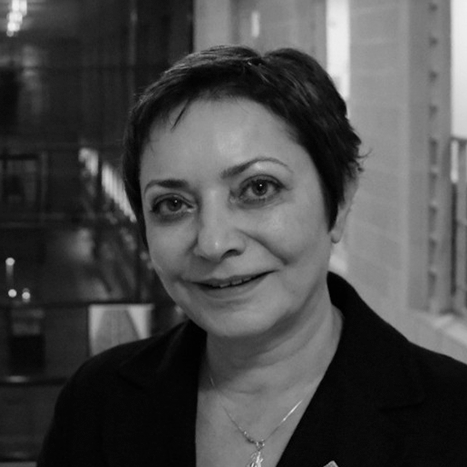
Dr. Nadia Naser-Najjab
Senior Lecturer in Palestine Studies at the European Centre for Palestine Studies (ECPS), Institute of Arab and Islamic Studies, University of Exeter. She serves as Director of ECPS and Director of the MA Palestine Studies programme. Her research is grounded in firsthand experience and original data collection, with focus on settler colonialism, resistance, and the lived realities of Palestinians.
Email: N.naser-najjab@exeter.ac.uk
Website: nadia-naser.com
LinkedIn: linkedin.com/in/nadia-naser-najjab-3000686a
Sport in any colonial context functions as a mechanism of control and exclusion and as a site of resistance. Mahmoud Darwish understood football as a mode of resistance, a symbolic arena in which the “unequal balance of power between Great powers and small States” could be momentarily overturned. When Argentina won the 1986 World Cup against England, Darwish considered that Diego Maradona humbled the arrogance of Britian over the 1982 Falkland Islands war. In his words, Maradona “was bringing the island back to Argentina and calling the attention of the British Empire that it was still resting on the laurels of the distant past.”
For Darwish, football became “an outburst of patriotism,” a form of self-expression for those denied political voice. Football thus offered “a present freedom of expression absent elsewhere, or a sovereignty seeking to maintain its dominance.”
For Palestinians, sport has long been a vehicle for asserting national identity and a form of resisting colonialisation and dispossession. In the words of one national team player, “even if we do not score goals, it is enough that we represent Palestine, football unites us as players are from all parts of historical Palestine.”
That sense of unity extended across the Arab world and became visible during the 2026 World Cup, when Egypt’s coach Hossam Hassan sparked regional debate by raising the Palestinian flag after Egypt reached the Round of 16, a gesture celebrated by Arabs and Palestinians but condemned by Israel. Days later, on 7 July, an Israeli strike killed Mohammed al-Wahidi, a respected Palestinian community leader who had been central to relief efforts in Gaza and to organizing public World Cup screenings that brought rare joy to thousands. Many Palestinians and Arabs interpreted his killing as a retaliatory message following Hassan’s public show of solidarity. The match between Argentina and Egypt became a political contest. When Argentina defeated Egypt, Arab spectators challenged the result and accused FIFA of favoritism and racism. These claims, whether grounded or not, placed Palestinian narratives and exposed their endured suffering on the international stage.
Palestinians have faced systematic exclusion from organized sport since the Mandate era, when Zionist athletes established the Palestine Football Association in 1928, joined FIFA the following year, and claimed to represent Palestine while marginalizing Palestinian participation. The Nakba destroyed or colonized existing clubs, expelled athletes, and cleared space for the new Israeli state. After 1967, every Palestinian sporting initiative in the West Bank and Gaza required military orders and permits. Oslo added new layers of fragmentation, movement restrictions, checkpoints, and the apartheid wall and repeated incursions all undermined sporting life.
Since October 7, 2023, the scale of devastation has been unprecedented as stadiums, clubs, training grounds, and the sport headquarters have been destroyed. Yarmouk Stadium was turned into an internment site where detainees were blindfolded and stripped. In the first two months, Israel killed 85 athletes, including 55 footballers, among them Mohammed Barakat, the “legend of Khan Younis.” On 6 August 2025, former national team player Sulieman al-Obeid, known as the “Palestinian Pelé,” was killed while waiting for food under conditions of severe starvation.
The assault on sporting spaces extends across the West Bank. The restriction on movement is augmented with more than 925 obstacles between checkpoints, gates, and roadblocks. Consequently, the 12,500-capacity Al Ram Stadium, established in 2008, stands closed today. Many athletes are targeted and arrested.
However, and despite these challenges, sport has remained a vital arena of Palestinian resistance. Even in Gaza, amid rubble and displacement, young Palestinians are reclaiming space and agency through urban fitness practices such as street workouts and parkour, acts of defiance, affirming Palestinian presence and refusing erasure. They formed the Palestine Amputee Football National Team and organized The Hope Championship for Amputee Football in November 2025.
Since the 1948 Nakba, Palestinians rebuilt sporting life in refugee camps by forming teams and naming clubs after the cities and villages from which they were expelled, using football to preserve continuity, memory, and national identity. The PLO later formalized this relationship and it also aligned Palestinian resistance with global anticolonial movements that had translated into growing international solidarity. During the 2022 World Cup, fans displayed Palestinian flags, raised “Free Palestine” banners, and refused interviews with Israeli media, echoing the BDS slogan, “Love Football. Hate Apartheid.” The 2026 World Cup has seen similar expressions of solidarity, with supporters condemning Israel’s ongoing assault on Gaza and activists covering an official FIFA sign with a massive banner reading, “Kick Israel out of FIFA,” accusing the organization of sportswashing and violating its own statutes. Palestinian defiance endures through transnational solidarity. Across the world, football teams have celebrated their victories by raising Palestinian flags, chanting in support of Palestine, and dedicating their qualifications to Palestinians. These gestures translate the meaning of collective resistance into the global sporting arena andoffer Palestinians moments of recognition, dignity, and hope.
Such acts of solidarity help sustain the imagination of liberation and justice, affirming that Palestinian struggle resonates far beyond the borders imposed upon it. This is why Palestinians in Gaza gather on the rubble or from the tents to watch the World Cup, celebrating the victories of teams that raise their flag or speak their name, finding in those moments a sense of visibility and shared humanity. Palestinian symbols such as the keffiyeh have become global emblems of resistance, transformed into a political statement against oppression and for universal justice.