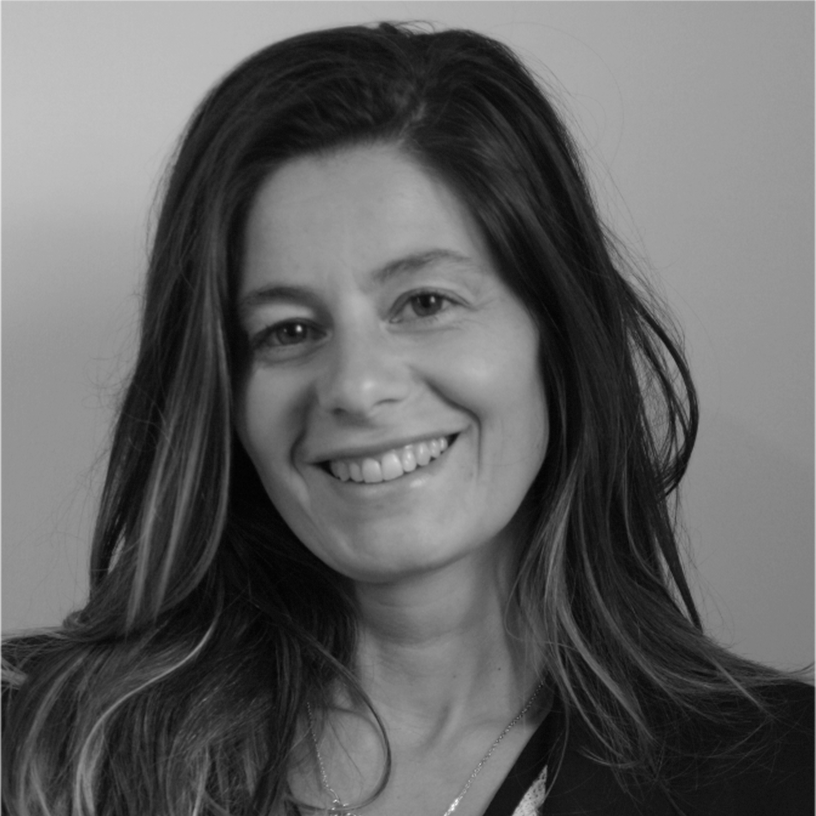
Dr. Sandy Montañola
Lecturer in Journalism at the University of Rennes (France) and Head of the Journalism program. Her researches focuse on gender in sports media coverage, with a particular interest in the sociology of journalism, professional practices, and social representations. She is the author of Genre et journalisme (De Boeck) and Couvrir le sport à la télévision (INA).
Email: sandy.montanola@univ-rennes.fr
Linkedin: https://www.linkedin.com/in/sandy-montanola-70206327/
As media attention turns to the 2026 FIFA Men’s World Cup, one topic remains overlooked: who is sent to report from the field? Who gets to comment on the matches? Being selected to cover the World Cup is one of the highest forms of professional recognition in sports journalism. It therefore provides an interesting lens to examine how gender inequalities are made visible and framed.
Mega-events amplify existing inequalities in sports newsrooms
Although journalism has undergone a process of feminization, sports newsrooms remain among the most male-dominated areas. Around 2010, women accounted for about 10% of sports journalists across Europe, a figure similar to that observed in the United States. Mega-events reinforce these inequalities. A study examining the 2016 Olympic Games found that 4.5% of bylines were attributed to women compared with 35.2% to men among Spanish journalists. These women also covered football and international athletes less often than men. The FIFA World Cup combines several forms of symbolic prestige: on-site reporting, live match commentary and football, the most prestigious sport within the sports media hierarchy. In a competitive field, these positions continue to be assigned primarily to men, as shown by the accreditation data of the last tournaments. In 2018, among the 419 German journalists, 49 were women (11.69%). In 2022, the figures vary by country: 9%, 12% and 24% of women for France, Germany and Sweden respectively. Of the 150 French journalist in 2026, 10 were women (6.67%). These figures suggest that Women’s access to World Cup remains selective. The sociology of journalism shows that inequalities do not only occur at the point of entry into the profession, but also through the hierarchy of assignments. A study examining the 2022 World Cup shows that Spanish women (6.70%), received less airtime than men and were more often assigned hosting roles rather than tactical analysis.
Can the World Cup turn the lack of gender diversity in sports journalism into a public problem?
While the FIFA World Cup amplifies these inequalities, can this visibility also transform them into a public problem? The French case can be useful: Since 2021, the foundation of the Women Sports Journalists Association and the documentary “I’m Not a Slut, I’m a Journalist” have contributed to reframing gender inequalities as a collective issue. Research gained renewed visibility as it can be observed through a scientific study conducted in 2026 with this Association to measure the proportion of women working in sports journalism. Making this situation public required several elements: the organization of a specific event (press conference) the media opportunity generated by the World Cup, the production of data, but also a process of appropriation, reframing and dissemination by a range of actors from the sports, media and political fields. In fact, this visibility was further strengthened by an opinion piece written by Marie Portolano “Just tell us if we’re bothering you”, and by the dissemination of the results by the French Ministry of gender equality. But, as research in the sociology of public problems has shown a social situation and inequalities doesn’t automatically become a publicly recognized problem. In fact, each FIFA tournament generates media attention but the coverage tends to follow two recurring narratives. The first focuses on pioneer as the first women to commentate men’s football. For example, Le Monde noted in 2018: “Abroad, journalism becoming more feminized in Great-Britain with Vicki Sparks on the BBC, or in Germany with Claudia Neumann on the ZDF (…) yet in France, in 2018, women commentating on football matches on television can be counted on the fingers of one hand”. The second narrative focuses on controversy particularly the harassment, insult, criticism of women’s voices, from Claudia Neumann to Sara Carbonero or from campaign.
This temporary media attention rarely frames the situation as professional inequalities; coverage tends to focus on the exceptional context and to individualize experiences through personal testimonies rather than examining the structural mechanisms shaping careers and access. As a result, similar media narratives reappear from one tournament to the next, without connecting individual experiences to broader patterns of professional inequality. Several obstacles help explain this situation: First, sports institutions, such as FIFA, and media organizations rarely provide systematic information on the gender distribution of accredited journalists. Second, academic research rarely reaches the media, despite decades of convergent findings across countries from the United Kingdom to Poland: women remain underrepresented in the most prestigious sections, sports and positions of responsibility. Professional routines continue to constrain their careers, while harassment reveals the persistence of professional norms in which authority and credibility are still implicitly associated with masculinity. Third, gender inequalities are often treated as a separate issue and remain largely absent from broader discussions about the transformation of sports journalism, including the growing role of content creators, the creator economy, sports consultants and artificial intelligence.… These transformations are shaped by powerful actors such as FIFA, which increasingly determine who gains visibility, who accesses privileged spaces, and which forms of sports storytelling are promoted. Yet these transformations also constitute spaces where gender norms can be reproduced or renegotiated.