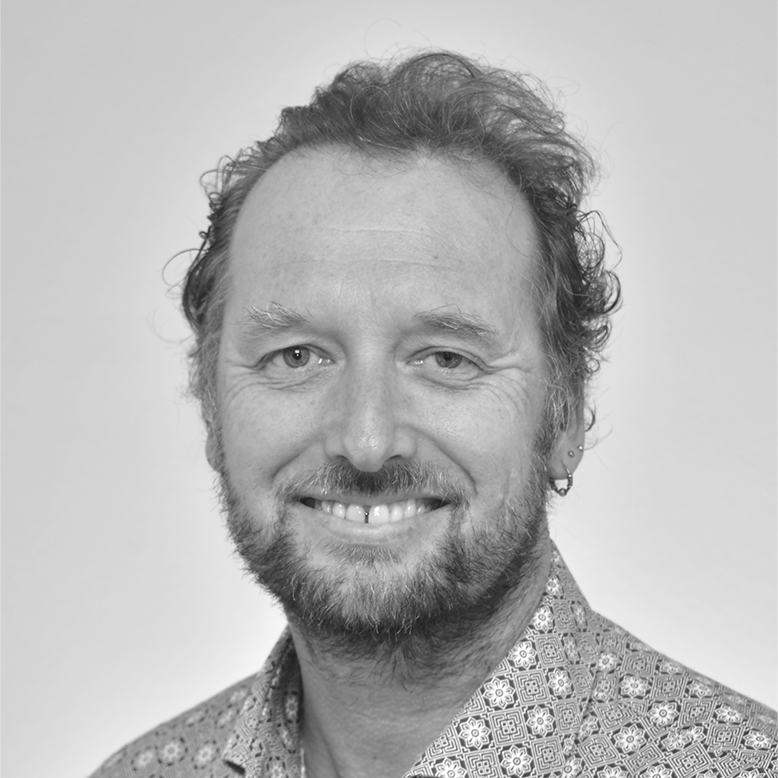
Dr. Jörg-Uwe Nieland
Senior scientist at Alpen Adria University Klagenfurt, associated staff member at the Institute for European Sports Development and Leisure Research at the German Sport University Cologne; Lectureships at the Universities of Düsseldorf, Salzburg, Vienna.
Email: Joerg-uwe.nieland@gmx.net
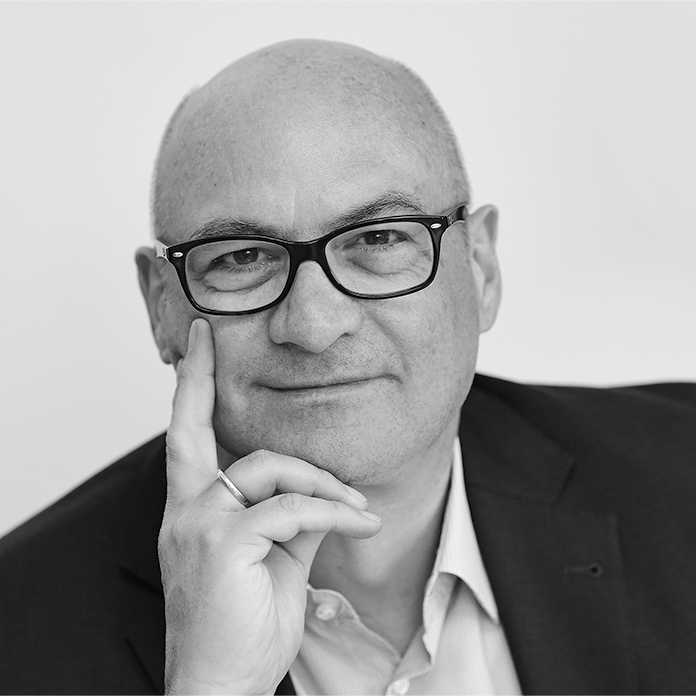
Dr. Thomas Horky
Professor for Sports Communication at Macromedia University of applied Sciences in Hamburg, Germany. He was visiting professor at Indiana University, the University of Nebraska-Lincoln, and International Fellow of the University of Iowa.
Email: t.horky@macromedia.de
Bluesky: @thomashorky.bsky.social
In media and communication research, Qatar 2022 marked a turning point. Criticism of FIFA’s awarding decision, the human-rights situation in the host country, and the commercialization of football did not remain confined to the pre-tournament phase, but persisted throughout the event and translated, at least in part, into behavioral consequences such as conscious non-viewing and weakened television ratings.
The pre-tournament media coverage of the 2026 World Cup in German-speaking countries initially seemed to confirm this pattern. In Germany and Austria, much of the debate centered less on tactics, squads, or sporting favorites than on the legitimacy of the event itself. Human-rights concerns, Trump’s political style, the role of FIFA, and the symbolic implications of staging a global tournament in the US framed numerous articles and commentaries.
This critical framing was clearly visible in the headlines. The German quality paper Süddeutsche Zeitung explicitly argued for a boycott, while Die ZEIT and Deutsche Welle raised broader questions about the political and moral conditions of the tournament. The magazine Der Spiegel captured the central ambivalence particularly well when it described the World Cup as “absurd, obscene and problematic” while maintaining that one could still look forward to it. In Austria, Der Standard functioned less as a normative voice than as a forum for public negotiation, indicating a similarly politicized but somewhat more plural discourse.
From a mediatization perspective, this does not mean that criticism failed. Rather, boycott appeals, fan protests, and NGO interventions are themselves symptoms of advanced mediatization because they follow media logics of visibility, framing, scandalization, and resonance. In 2026, German media like Sportschau continued to foreground criticism of FIFA and the host country. Protest was thus no longer external to the event, but part of its mediated constitution.
The outlook for Germany remained bleak: time differences of up to nine hours, a qualification campaign that generated little enthusiasm, and the memory of Qatar 2022 all dampened expectations for a new German “football summer.” Yet the tournament developed differently in practice. Germany remained deeply attached to football as a media experience, and the World Cup continued to function as the country’s dominant media event. Moral skepticism became more pronounced, but it did not translate into lasting disengagement.
Yet the tournament developed differently in practice than much of the pre-tournament criticism had suggested. After weeks of late-night viewing and pervasive media attention, one conclusion became difficult to avoid: Germany remains deeply attached to football as a media experience. The national team may no longer embody former sporting authority, but the World Cup still functions as the country’s dominant media event. Moral skepticism may have become more pronounced, but it did not produce lasting disengagement.
The ratings illustrate this clearly. Germany achieved its highest audience, 24 million viewers, during the opening match against Curaçao. Even the match between Mexico and South Africa attracted 10 million viewers in Germany despite limited sporting significance and a late kick-off. The national team’s later matches drew lower figures—18.26 million, 18.47 million, and 17.57 million—but this decline can plausibly be linked above all to scheduling, since the knockout match against Paraguay ended only around 1:30 am German time. Compared with the low point of 2022, when Germany’s early exit corresponded with only 14.52 million viewers, the recovery in audience attention is unmistakable.
The broader broadcasting data reinforce this interpretation. Streaming service MagentaTV held the rights to all 104 matches and reported around 200 million contacts, even if this figure likely involved multiple counts. More importantly, the public service free-on-air ARD and ZDF, which sublicensed 60 matches, reached nearly 59 million people through their cross-media coverage. Around three-quarters of the population in Germany therefore came into contact with World Cup content on public-service television. Even major tennis broadcasts with successful German participation remained far below these figures, which underlines the exceptional status of the World Cup within the German media system.
This empirical contrast matters theoretically. Qatar 2022 had seemed to weaken the classic media-event pattern (Dayan & Katz 1992; by showing that politicization could disrupt habitual forms of collective viewing. North America 2026, by contrast, suggests a re-stabilization of that pattern at a very high level of attention. The event was not depoliticized; criticism remained visible at the level of discourse. But it was successfully re-normalized in media use.
The title therefore captures more than a journalistic punchline. FIFA “did it again” by producing a tournament that was politically troubling yet highly attractive as a media spectacle. The media “did it again” by moving from boycott discourse to routinized event narration. And audiences “did it again” by translating moral skepticism not into lasting abstention, but into reflective, selective, and still intense participation.
Germany remains a country profoundly shaped by football as a media culture. Regardless of political controversy or sporting uncertainty, the World Cup continues to command exceptional collective attention. When the tournament begins, Germany still turns on the screen and watches.