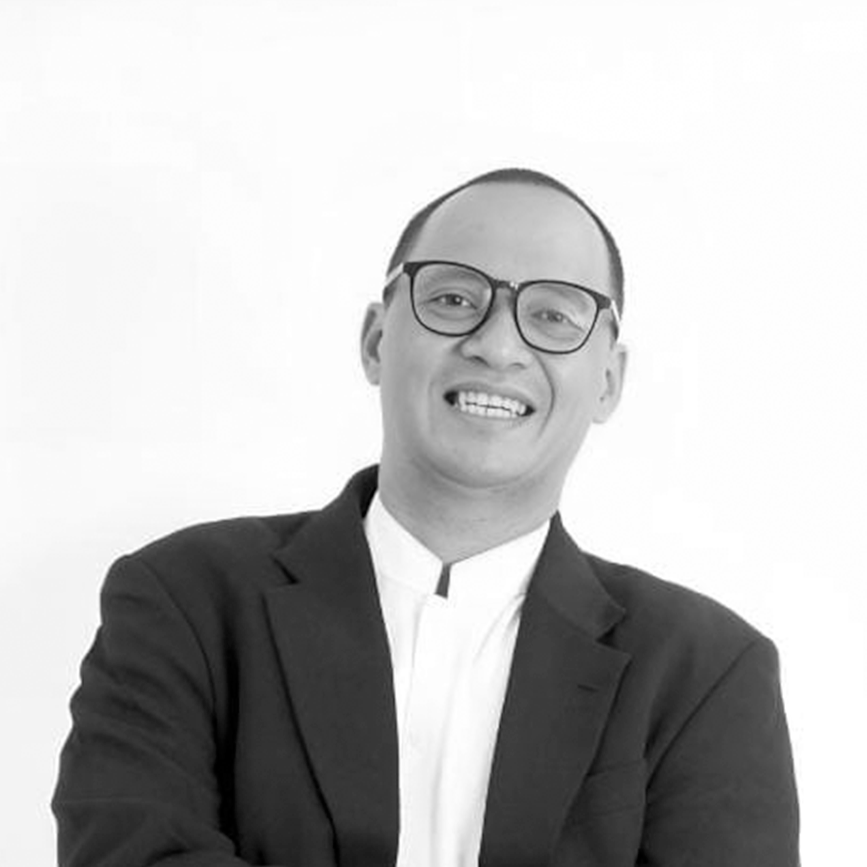
Dr. Meistra Budiasa
is an Associate Professor of Communication at the University of 17 August 1945, Jakarta, Indonesia and Executive Director of the Center for Media and Sport Studies. Rooted in cultural studies, his research explores sport events, media, and culture as spaces of identity, representation, and mediatization. A leading scholar in Indonesia’s sports communication ecosystem, he has authored 2 books, contributed to the Olympic and Paralympic Analysis 2024 volume, and published in accredited national and peer-reviewed international publications, including the Howard Journal of Communications. He frequently contributes op-eds and commentary to national media outlets. Dr. Budiasa serves as Communication Director for the International Association for Communication and Sport (IACS), International Liaison for the ICA Sport Communication Interest Group, and a reviewer for Journal Communication & Sport.
Email meistra@gmail.com
Twitter (X) @meistra
Linkedin www.linkedin.com/in/meistra,
Instagram @meistra
The 2026 World Cup has also transformed the face of soccer in new and different ways. Whereas in the past, spectators in Indonesia at stadium matches were synonymous with rioting, rowdiness, and unruly behaviour, the 2026 World Cup qualifiers have changed that perception. Spectators now resemble those at a music concert, and many children feel safe watching the matches at the stadium. Additionally, a new phenomenon has emerged among those watching live at the stadium: the widespread use of cell phones to capture the excitement of the stadium experience and the match itself for sharing on social media. Thus, the Indonesian national team’s journey toward the World Cup should be understood as a process of social and cultural transformation, not merely a sporting endeavour. There has been a shift in the national team’s image from one dominated by diaspora players, mostly from Europe, to the presence of a foreign coach who has also gained popularity, such as Shin Tae-yong from South Korea. This has gone hand in hand with the national team’s achievements, which have made history for Indonesian soccer by advancing to the fourth round of World Cup qualifiers and their popularity has been intertwined with these accomplishments.
The phenomenon of changing soccer viewing habits that occurred during the Indonesian national team’s journey toward the World Cup is part of an interconnected series of events, primarily driven by the strong influence of social media. Coaches, players, and fans have become content that attracts mass audiences. The South Korean coach, who has been in charge from 2019 to 2025, is closely tied to the large K-Pop fanbase. When he was first introduced to the public in 2019, Statista data showed that Indonesia ranked second globally in K-Pop video streaming consumption. Meanwhile, the players’ appeal has significantly strengthened, drawing fans to the stadiums. According to data, Indonesia recorded the highest number of spectators during the Asian zone qualifiers for the 2026 FIFA World Cup, which took place from September 2024 to June 2025. Another notable trend is the widespread culture of public viewings across various regions of Indonesia. The appeal of having diaspora players on the national team—most of whom are of European descent has become a phenomenon emerging as a new icon of Indonesian soccer. Popular names such as Maarten Paes, Thom Haye, Calvin Verdonk, Jay Idzes, and several others on the national team have become figures who are not only beloved but have also transformed the face of Indonesian soccer.
This transformation in soccer demonstrates that the national team’s journey serves as an example of how sports have become central to popular culture. Here, soccer evolved into a cultural force that influences media consumption practices, the formation of collective identity, and the dynamics of public spaces. In this context, soccer is understood as a form of popular culture that shapes the rhythm of social life for instance, conversations about game strategies take place in various settings such as workplaces, cafes, public spaces, and social media; the culture of watching games together has evolved into a collective ritual; and the national team jersey has become both a symbol of identity and a lifestyle product. Players and coaches are not merely positioned as athletes or team managers but also as public figures who influence cultural trends, consumption practices, and even national representation in the digital sphere. Drawing on the concept MediaSport (1998) by Lawrence Wenner, which states that “sports and media form a mutually reinforcing relationship, making sports one of the most dominant forms of entertainment in modern society”. Subsequently, Media Sports Cultural Complex (2003) by David Rowe asserts that “media and sports have converged to form a media sports cultural complex,” and Mediatization (2013) by Andreas Hepp explains that the media is no longer merely a conduit for information but shapes social practices and everyday life. When these three perspectives are considered together, the Indonesian national team’s journey to the World Cup can be understood as a process of the “Sportification of Popular Culture”. This term is used to describe a condition in which sports particularly soccer is no longer merely part of popular culture but have evolved into a cultural force that shapes media consumption, such as the formation of identity and social practices. The national team’s matches are no longer merely sporting events but also cultural events that generate conversations, symbols, emotions, and social practices that extend far beyond the confines of the stadium.
The greatest achievement of the Indonesian national team’s journey may not be solely the opportunity to compete in the 2026 World Cup finals. Equally important, however, is how this journey has transformed the role of soccer in the lives of Indonesians today. Soccer has now become one of the most influential cultural languages in shaping the national imagination, connecting millions of people through shared media experiences. What has changed most is the public’s perception of soccer, which has become more inclusive and welcoming to all groups. Thus, the journey toward the World Cup today is not merely a story of Indonesia’s growing athletic achievements, but also of how soccer has become a cultural force that shapes public life in the digital media era.