
Dr. Roxane Coche
Associate Professor and Department Chair in the University of Florida, College of Journalism and Communications. She covered one FIFA World Cup and three Olympic games as a journalist, publishes on sports communication and sports sociology, and teaches sports media.
Email: rcoche@ufl.edu
Instagram: @cjc.drc
Website: http://linkedin.com/in/roxanecoche
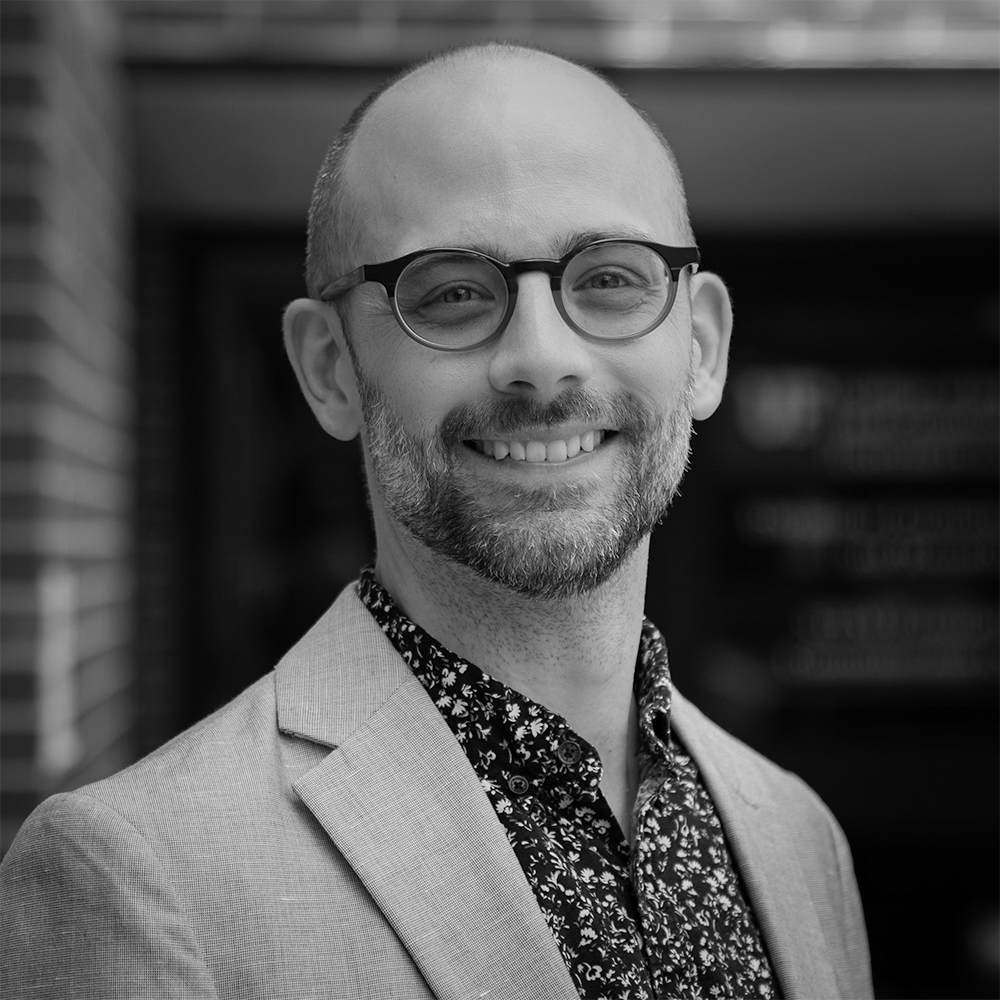
Dr. Nathan Carpenter
Director of the Atlas Social Media Listening Lab in the University of Florida, College of Journalism and Communications. He analyzes social media for academia and industry and is co-author of the textbook Social Media Research Methods (2023, Cognella Academic Publishing).
Email: nathancarpenter@ufl.edu
Bluesky: @n8carp.bsky.social
Instagram: @ufatlaslab
Website: https://www.linkedin.com/in/nathan-carpenter-phd-654140a/
Social media platforms are often accused of rewarding divisive content or controversies through algorithms that prioritize emotional reactions. In other words, social media can seem designed to elevate scandals, disputes, and polarization. Yet, the 2026 FIFA World Cup told a different story.
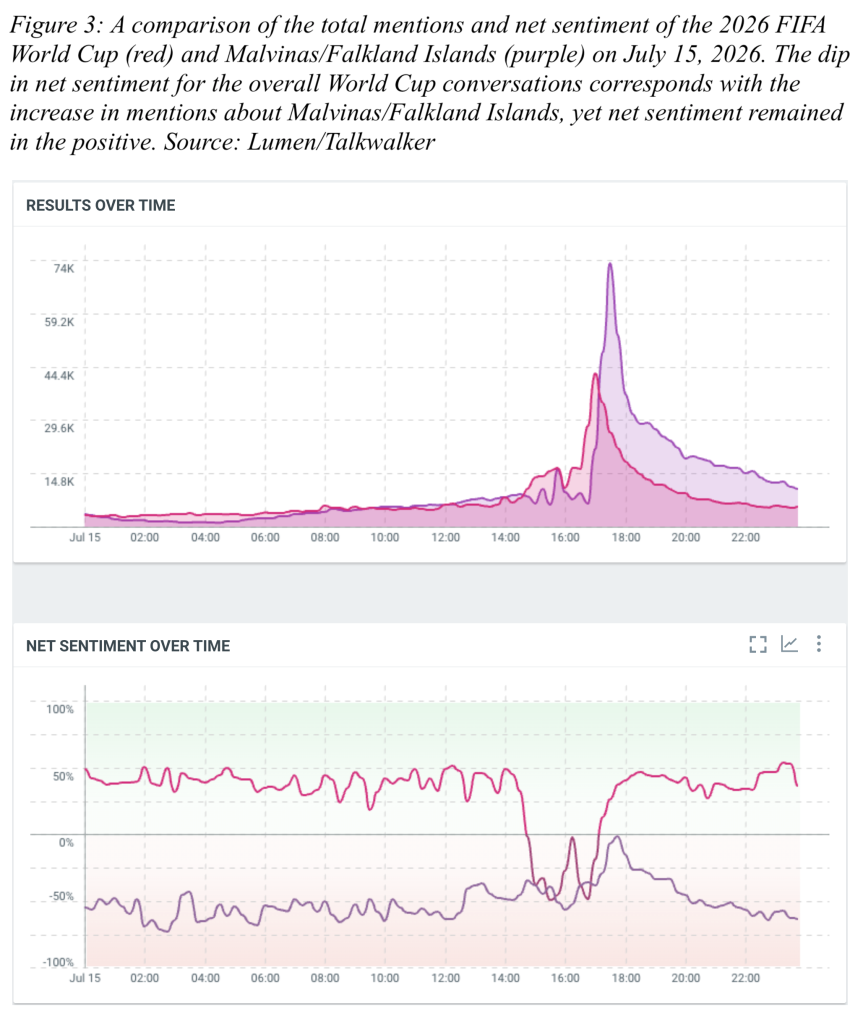
The Atlas Lab used Talkwalker to track World-Cup-related public social media posts and digital media stories between June 1st and July 20th, 2026. A search query with 42 terms across 12 languages identified 31.2 million mentions, most of them from X (25.8 million), followed by Reddit (1.5 million), online news (1.5 million), YouTube (512,500), public Facebook pages (406,900), blogs (389,400), online forums (308,900), public Instagram pages (258,800), and Bluesky (237,100). Other online media and social sources accounted for an additional 300,000 mentions.
When taken together, these posts and stories generated 3.6 billion engagements (likes, reactions, comments, shares) and had the collective capacity to generate 11 trillion impressions. The scale of these conversations reinforces why social media have become such an important lens through which to understand modern mega-events. Online platforms function as a virtual stadium where celebrations, frustrations, debates, and memories are shared in real time across national and linguistic boundaries.
Interestingly, despite social media’s tendency to amplify controversy, the overall tone of that discussion remained remarkably positive. Net sentiment approached neutrality on a handful of days (e.g., on July 1 following tragic deaths in Mexico after the country won its first World Cup knockout game in 40 years), but it remained positive every day except on July 6th. Overall, only 12.5% of mentions expressed negative emotions such as fear, anger, or sadness, while nearly three times as many (36.6%) expressed positive emotions including joy, excitement, and happiness.
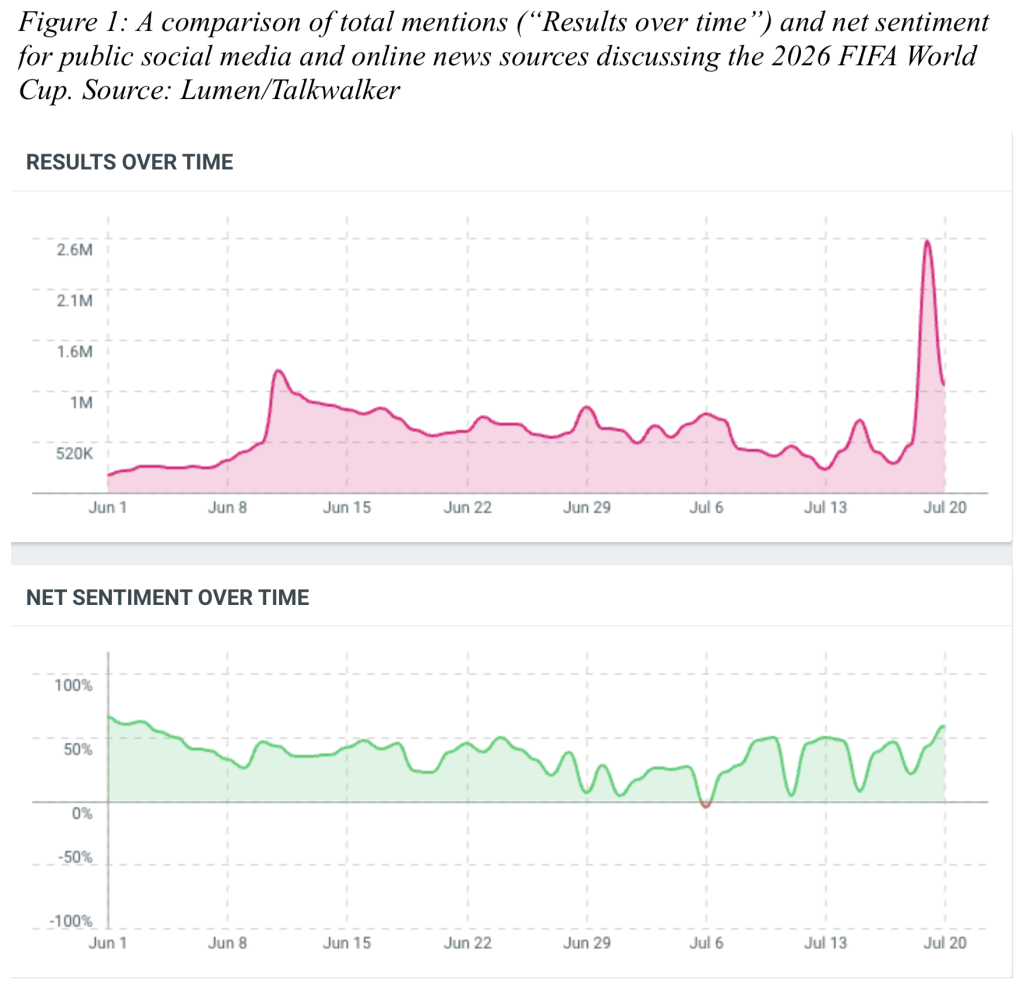
Net sentiment dipped into the negative on July 6th mostly because of the overturning of US player Folarin Balogun’s one-game ban after US President Donald Trump called FIFA President Gianni Infantino, which prompted a lot of anger. On the same day, Portugal’s loss to Spain and Ronaldo’s farewell to World Cup competition also led many to express disappointment or sadness, but that was balanced out by others who celebrated Spain’s victory. Thus, the Balogun controversy appears to be the primary driver of the negative sentiment observed on July 6th. However, the conversation moved on quickly, returning to celebrating matches, players, national teams, and/or shared experiences.
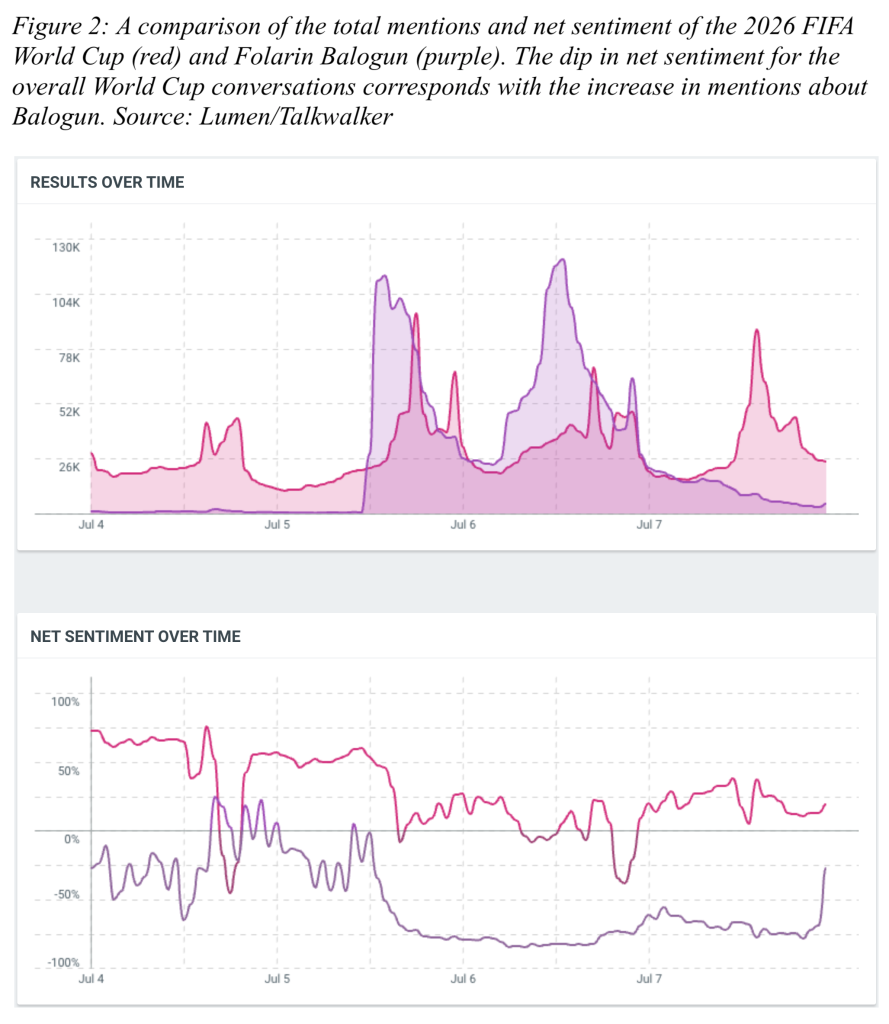
Later, other controversies emerged, but overall sentiment remained positive. For instance, Argentine players held up a fan-made banner about the disputed Falkland Islands after beating England in the semi-finals. The incident reignited a long-standing geopolitical dispute between Argentina and the UK, and it sparked calls for an investigation because FIFA prohibits political messaging. This incident is a reminder that national identity remains central to international soccer. Yet, discussions again shifted to less contentious and more positive themes quickly.
Though other controversies emerged throughout the tournament, the last one happened at the very end. Following Spain’s victory in the final, Donald Trump extended his presence on the presentation podium as Spanish players lifted the trophy, which generated a wave of online criticism. The resulting conversation produced one of the tournament’s most visible declines in sentiment, and a word cloud of posts mentioning the US president was dominated by negatively associated terms.
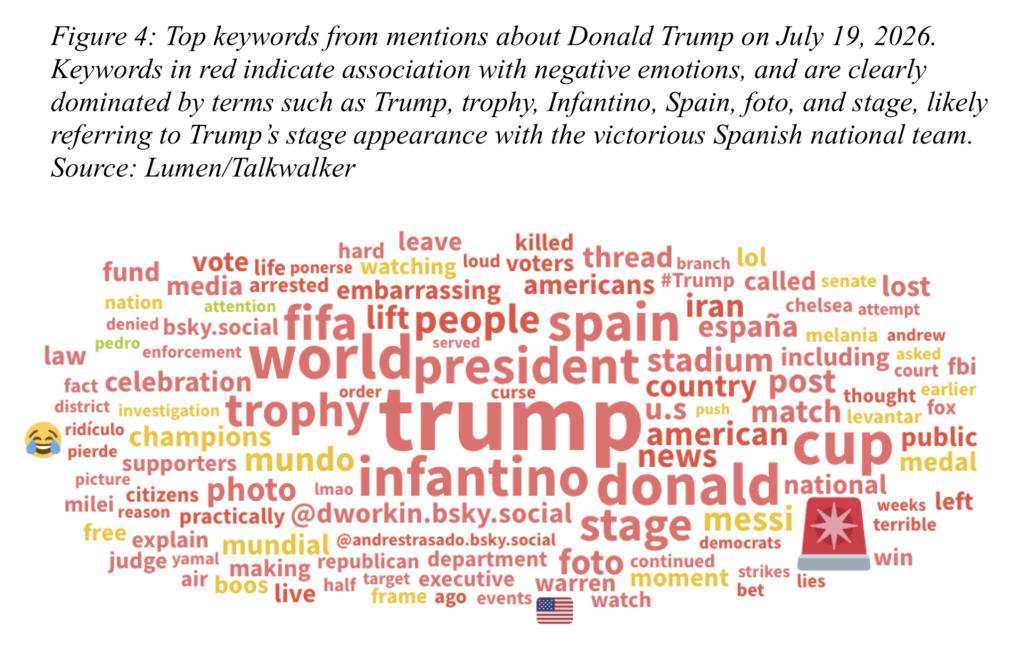
Yet even this controversy proved short-lived. Much of the broader conversation quickly returned to Spain’s achievement on the field, the performances that led to the title, and celebrations among players and supporters. The Spanish Federation’s later decision to crop Trump out of the photographs used in its celebratory posts generated additional discussion (and mockery, which prompted the White House to respond), but the incident became another example of a recurring pattern throughout the tournament: moments of controversy attracted attention (journalists reported them, algorithms amplified them, users debated them), but they did not overshadow the sporting spectacle itself. The conversations that shaped the tournament were far more likely to center on goals, victories, players, and national teams.
This distinction highlights an important difference between visibility and significance. Controversies often generate dramatic spikes in attention, but they do not necessarily become the defining story of an event. Politics, governance disputes, and social controversies are increasingly intertwined with international sport, and this year’s World Cup was hardly spared, notably with visa issues affecting officials, players, and fans from multiple countries. Yet, fans overwhelmingly used social media to celebrate athletic achievement, share emotional experiences, express national pride, and participate in a global conversation about the world’s most popular sport. In that sense, though Jules Rimet, often considered the father of the World Cup, never knew the internet, the 2026 tournament reflected his belief that soccer could connect people across national borders even amid political differences.
Though future mega-events will likely face increasing challenges as calls for transparency grow and technology continues to multiply communication methods, the 2026 FIFA World Cup demonstrates that sport retains a remarkable ability to generate joy, community, and collective celebration on a global scale—even in digital environments often criticized for rewarding outrage. Beyond the backlash, the dominant story remained soccer itself.