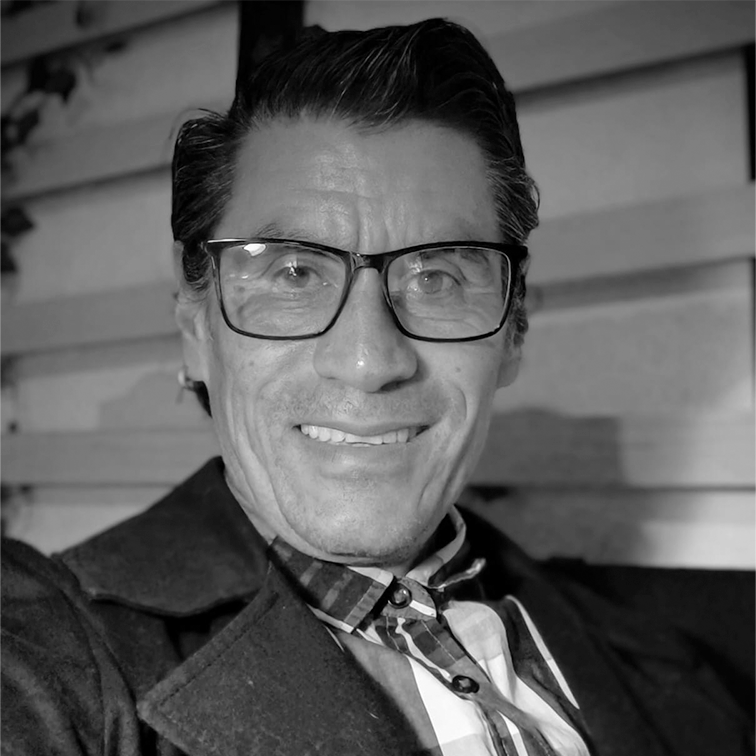
Dr. Sergio Varela Hernández
teaches at the Center for Anthropological Studies, part of UNAM’s Faculty of Political and Social Sciences. Over the past 25 years, his research has explored sports and how they intersect with gender, the body, politics, and modernity in Mexico.
sergiovarela@politicas.unam.mx
Mexico has made a name for itself by winning hosting rights, not by winning World Cup matches. It’s the first country to host the tournament three times: 1970, 1986, and as co-hosts with Canada and the United States for the 2026 World Cup.
The way these three hosting bids came together evolved considerably over the decades. This article briefly lays out how Telesistema Mexicano—later Televisa, and now Ollamani—landed the bids and shaped the narratives for each World Cup—or, in the case of 2026, how the Mexican broadcasters did not.
1970: The World Cup of the Authoritarian “Mexican Miracle”
The story of the Mexican Miracle is well known, a kind of political and economic myth about sky-high GDP growth and a stretch of political and social stability that was unheard of before and after. All of this unfolded under the authoritarian rule of the Institutional Revolutionary Party (PRI) and a sociopolitical repression that swung between negotiation and extreme violence—tragically made clear on October 2, 1968, with the student massacre at Tlatelolco.
The owners of the broadcasting system, especially television, were integral to this period and stood out as major players. Telesistema Mexicano was key to creating the myth of the miracle and Mexican modernity. Landing the Olympics host bid was huge for cementing the idea of national progress and development.
But it was the 1970 World Cup project that made Telesistema Mexicano economically and narratively “own” a global mega-event. Several factors contributed to this, including television’s somewhat haphazard foray into football broadcasting in 1956 and Telesistema Mexicano’s purchase of one of Mexico’s most iconic teams. The son of Telesistema Mexicano’s owner, Emilio Azcárraga Milmo, helped the organization gain administrative control over the Mexican Football Federation and later the regional confederation, CONCACAF, alongside figures like Guillermo Cañedo, consolidating Telesistema Mexicano’s authority.
The Argentine delegation, which was competing with Mexico for the bid, accused the Mexicans of influence-peddling to secure votes during the 1964 FIFA Congress. Despite this controversy, Mexico “won” its first hosting gig, and Telesistema Mexicano rolled out an all-powerful narrative about the country’s virtues, its people, and its government—violence and authoritarianism notwithstanding.
Mexico 1986: The Hand of God Brought the World Cup Too
If that tournament is remembered on the pitch for Diego Maradona and the Hand of God, the real divine hand was marked by corruption among Mexican and FIFA leadership. Originally, hosting had been awarded to Colombia. But pressure mounted considerably when the infamous “notebooks of charges” demanded more from the South American country. Then-president Belisario Betancourt announced his country’s “withdrawal” from organizing the Cup. Telesistema Mexicano, now called Televisa, and its leadership quickly sold the idea of how hosting a second World Cup would Benefit Mexican society. With virtually no opposition, Mexico and its television consortium, won hosting rights.
Mexico—despite the aftermath of the brutal September 1985 earthquakes and a crushing economic crisis—was lauded as a flawless host. Political and commercial propaganda for the Cup flooded radios, TVs, newspapers, and the streets. Mexico was still under the definitive sway of television and its owners, who controlled football however they saw fit. Everything about the World Cup ran like clockwork under Televisa’s auspices—so much so that a good chunk of the opening ceremony was purely digital creation for the TV broadcast.
Trump’s World Cup (and Mexico’s Crumbs)
Over the next forty years, changes in ownership of Televisa and in politlical power in Mexico led to significant societal shifts. After losing power in 2000, a series of political and economic issues brought PRI back in 2012.
In 2018, the PRI government joined Canada and the U.S. in a bid for the 2026 World Cup. As has been well documented, the U.S. had demanded consideration after the FIFAgate scandal, including losing bids to Russia and Qatar.
But Andrés Manuel López Obrador derailed the PRI’s reelection train, and streaming—along with its own declining reputation—knocked Televisa off track. The drop in influence and ratings for Latin America’s biggest media consortium has been so steep that Emilio Azcárraga Jean himself has had to distance himself from the group as much as possible. He faces corruption-related accusations tied to FIFA. Televisa formally split from the football business and created Grupo Ollamani, which currently controls Club América in partnership with the owners of the New England Patriots, as well as the Azteca Stadium—now Estadios Banorte, since that bank financed the massive stadium renovation project in anticipation of the World Cup.
Now, with Trump in his second presidency, it’s clear that—unlike in 1970 and 1986—Mexican television didn’t control either the big slice or the dominant narrative of the World Cup. Fox and other U.S. media conglomerates have taken over football and its big-money business: broadcast rights.
So, while Mexico was socially front and center with its celebrations and appetite for festivity, Ollamani—the watered-down front company for Televisa—had to settle for the crumbs that Fox and Trumpism tossed its way. Still, it’s worth saying: those crumbs remain pretty juicy.