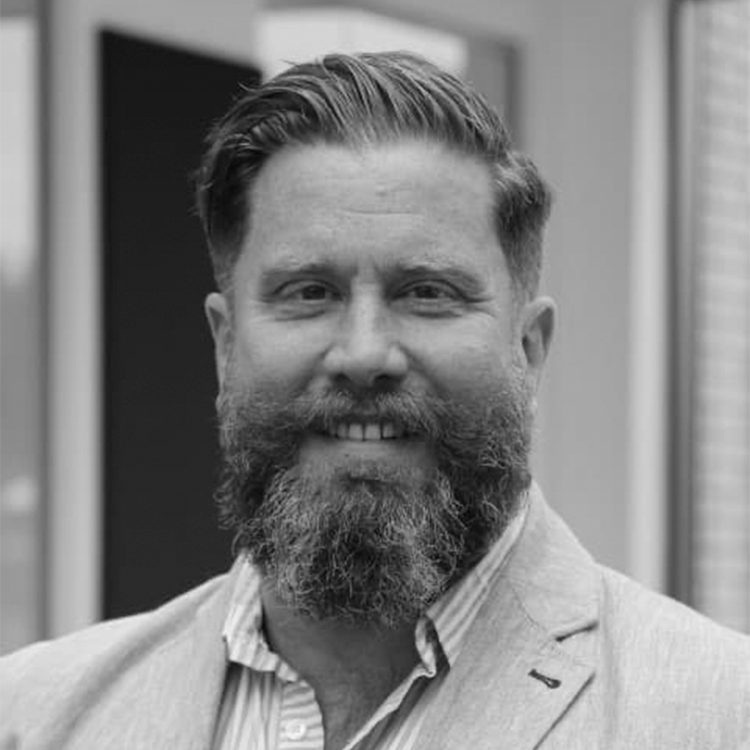
Dr. Mark Doidge
Dr. Mark Doidge is a Reader in the Sociology of Sport in the School of Sport, Exercise and Health Sciences at Loughborough University. He is the school’s Sport research theme lead and lead for the university’s Sport for Climate Action and Nature research group. His research focuses on making sport an inclusive and sustainable space for all. His research focuses on social activism among football fans, climate action, anti-racism, and supporting refugees. He is the author of a number of books, including Football and Climate Change (2026); Ultras (2020), Collective Action and Football Fandom (2018), and Football Italia (2015).
Email: m.doidge@lboro.ac.uk
Bluesky: markdoidge.bsky.social
The image of FIFA President Gianni Infantino was as ubiquitous as the image of the men’s World Cup. Public visibility, including photo-shoots with world leaders, has been a defining feature of Infantino’s presidency. This article argues that there is a political reason for this as it illustrates the pervasiveness of crony capitalism, the role of neoliberalism, and its links to corruption.
Since the 1970s, there has been a political consensus that deregulated capitalism is the mechanism to deliver opportunity for all. Milton Friedman argued that deregulated capitalism was the way to introduce democracy into everyday life through economic spending. What came to be known as neoliberalism saw a range of fiscal austerity measures and deregulation and privatization. Others go further and argue that neoliberalism fosters crony capitalism which facilitates corruption.
Crony capitalism is a more corrupt form of what Max Weber called “political capitalism,” where the political and economic elite collaborate for reciprocal benefit. Patron-client networks operate to facilitate economic and political power. Crony capitalism is more corrupt as these patrimonial networks see the exchange of favors and money in return for support. Political leaders bestow political and economic favors on those whose support they need to maintain their political position. Political “cronies” are unlikely to tackle the corruption that ensures their political and economic power. Furthermore, neoliberal policies have hollowed out nation states’ apparatuses to regulate for good governance or detect and prosecute corruption.
This trajectory reached its current apogee in 2025 with the re-election of Donald Trump to his second term as President of the United States. His ascension was accompanied by several political appointments of personal supporters, including Fox News broadcaster Pete Hegseth as Defense Secretary, whose investment broker enquired about defense-related investments a week before the Iran-Israel-U.S. war. It also included the (now) trillionaire, Elon Musk as unofficial head of the Department of Government Efficiency (DOGE). One of Musk’s companies, SpaceX has numerous U.S. government contracts. Musk also took the neoliberal ideology further to instruct DOGE to cut billions of dollars from U.S. government and international programs. Various analyses have suggested this will lead to between 14 and 25 million preventable deaths in the next 5-15 years.
Ironically, it was through an investigation by a U.S. state body, the FBI, that brought Infantino to power following the resignation of Sepp Blatter. There is a reason international sports federations are based in Switzerland, the home of light-touch financial regulation. At the time, the U.S. was the only country with the political and economic might to investigate the Byzantine corridors of FIFA. The alleged activities took place on U.S. soil, which gave U.S. authorities jurisdiction to investigate FIFA. The power of the U.S. ensured that even the Swiss authorities complied. Few would imagine that the current incarnation of the U.S. government or FBI would investigate FIFA for corruption, even if it took place on U.S. soil.
The 2015 FIFA Corruption Scandal highlighted widespread allegations across the FIFA governance structure, but in particular in regard to CONCACAF (the Central American confederation) and CONMEBOL (the South American confederation). The U.S. Department of Justice charged 14 defendants of racketeering, fraud, and money laundering, including over $150 million in bribes relating to sports marketing companies over 24 years.
This followed two previous FIFA corruption scandals exposing how personal networks were facilitating illegal payments. There were allegations that the 2022 hosts Qatar made illegal payments to achieve the votes. This followed another scandal after the collapse of the media company International Sport and Leisure (ISL) which allegedly gave bribes to FIFA officials in return for winning FIFA’s media contracts. These allegedly included former president João Havelange who had connections to ISL through his relationship with Horst Dassler, the former president of Adidas France.
Havelange secured his and FIFA’s economic power by increasing the size of the World Cup. More games also means more television and marketing revenue, which grants FIFA more power over the federations who are indebted to FIFA for the revenue. Infantino also increased the size of the World Cup.
Infantino also sought to protect FIFA from U.S. investigation by developing his crony connections with Trump. This includes the widely mocked FIFA Peace Prize, and also opening a FIFA office in Trump Tower. This isn’t the only connection between FIFA and Trump Tower. It was exposed during the 2015 FIFA corruption scandal that Chuck Blazer, the former CONCACAF secretary general, was accused of appropriating FIFA funds to rent an apartment in Trump’s apartment complex. Developing personal relationships with state actors helps remove the possibility of corruption investigations.
FIFA is a powerful symbol of the ever-expanding growth of crony capitalism. Those with institutional power act as patrons for those for whom they owe their position. Institutional resources are accumulated by those in close proximity to the president. The increasing revenue of FIFA is leveraged to support national federations (and their presidents and boards) who will provide their vote at the next General Assembly. The neoliberal approach to remove state regulation simply means that there aren’t the checks and balances to prevent this and ensures the circle of crony capitalism continues.