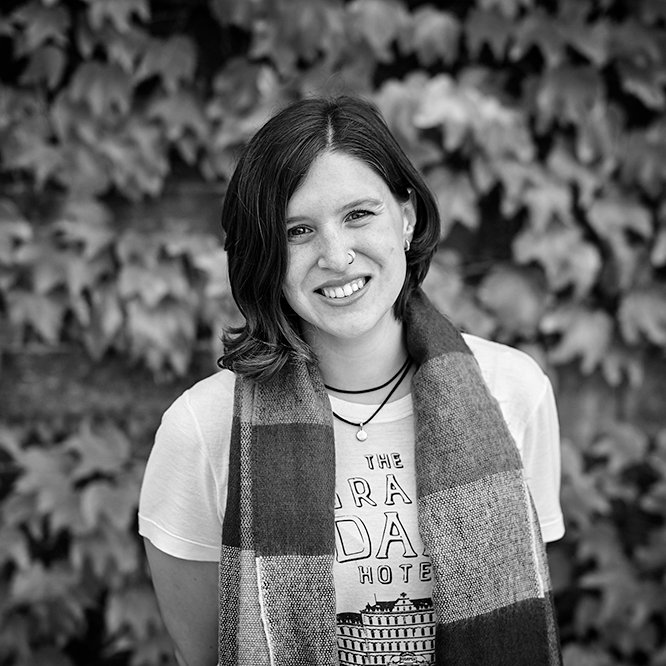
Dr. Cecilia Arregui Olivera
Assistant Professor at the Media and Journalism Studies Department, Aarhus University. Her research centers on conflict, news production, and media audiences in sports mega-events.
Email: ca@cc.au.dk
Website: https://www.au.dk/en/ca@cc.au.dk/
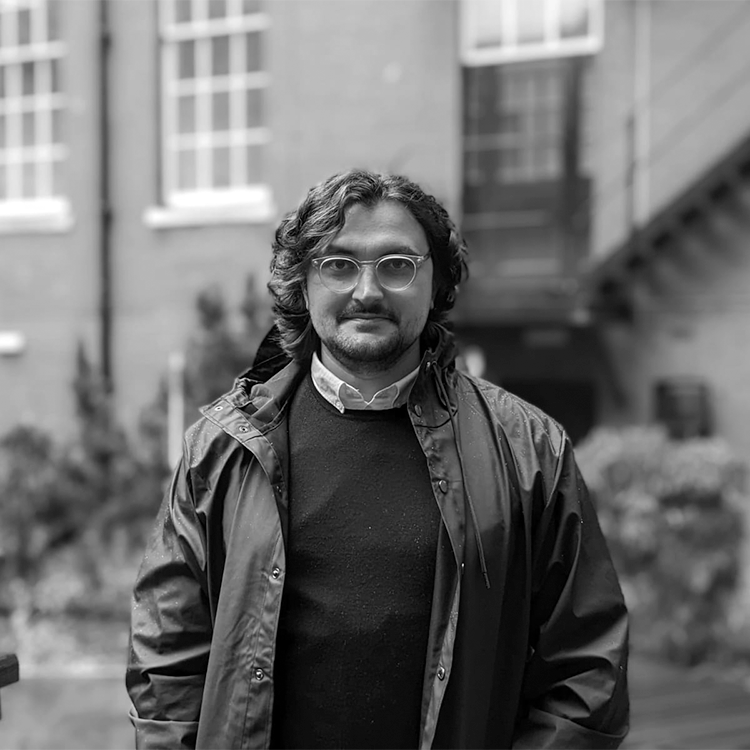
Dr. Vitaly Kazakov
AUFF and Marie Skłodowska-Curie Actions European Postdoctoral fellow at the Department of Media and Journalism Studies, Aarhus University. His research interests include politics and mediation of sport in multilingual, cross-cultural, comparative settings.
Email: vitaly.kazakov@cc.au.dk
Website: https://www.au.dk/en/vitaly.kazakov@cc.au.dk/
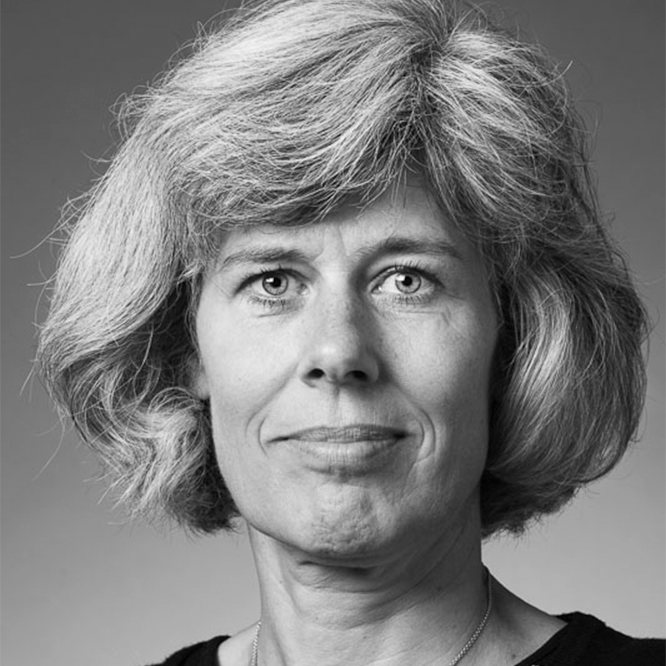
Dr. Kirsten Frandsen
Professor at the Media and Journalism Studies Department, Aarhus University. Published extensively on media and sport. PI on the project Soft ‘power play’ at the FIFA World Cup.
Email: imvkf@cc.au.dk
Website: https://www.au.dk/imvkf@cc.au.dk/
In the lead-up and early days of the FIFA World Cup 2026, agenda-setting Danish public service media predicted the event would become “the most intense and political, ever.” This interpretation—or framing—of the event, along with a hybrid coverage style that interwove narratives on sporting performances, implicit or explicit economic considerations and, to a lesser extent, geopolitical issues, mirrored the approach Danish media had adopted during the Qatar World Cup in 2022. This continuity underlines how journalistic practices, interpretations, and shifting balance between critical and performative perspectives are shaped by broader contextual structures. The strategic choices, practices, and behaviors of individual journalists and media organizations are rooted in their specific professional, social, and cultural contexts, which in turn reflect widely shared societal values—among politicians, audiences, and institutions—about the roles and obligations of media, the role of the state, and its relationship to society at large.
These values and contexts certainly differ across regions. They are grounded in historical trajectories, relate to political cultures and, over time, have solidified diverse media and sport systems across the world. While globalization has, arguably, made certain dimensions in those systems more uniform, some regions continue to have distinctive characteristics in both media and sport systems. For instance, the Nordic region maintains a media system with features of its own that differentiate it from others, boasting a strong public service media tradition that keeps adapting to new technologies, a high level of professionalism and institutional self-regulation, frequent state subsidies, and support and general high trust in the media. Additionally, recent research has indicated that sports events create liminal spaces that temporarily put journalistic norms aside, while others reveal that journalistic role performances in sports news are less diverse across the globe compared to other beats. In this context, a comparative study of media and audience interpretations of the FIFA World Cup 2026 in culturally and politically different contexts can deepen our understanding of how such structural and cultural forces co-shape popular interpretations of global sports mega-events today. Accordingly, we have centered on Mexico and Canada, two of the World Cup co-hosts with distinct media and sport systems of their own, as our other article in this collection illustrates.
The FIFA World Cup 2026 was a mega-event with global reach, much like its predecessors. It engaged, and was co-constructed by, a wide array of actors with diverse economic agendas and, arguably, more conflicting political interests than ever before. As such, it has become a prime example of how populist politics operate and illustrating the pivotal role of media—its dynamics, formats, and narratives—in shaping political discourse. The mediatization of politics had already reached a new level in Donald Trump’s U.S., but it now intertwines with a highly mediatized, commercialized, and emotionally charged global sporting event for political gains. For instance, the largely successful spectacle, coming after eighteen months of a highly polarizing administration, could influence the midterm elections approaching later in the year.
To date, research on the mediatization of sport has tended to downplay significant political dynamics increasingly present in elite sports and big events. Similarly, studies on the mediatization of politics have rarely addressed the important role of entertaining media formats, emotional engagement, and audience participation, reflecting a restricted understanding of politics as rational. These complexities converge in the case of the FIFA World Cup 2026, offering a rich opportunity for interdisciplinary research. This includes examining broader patterns, themes, and nuances in how media and journalism framed the event, as well as exploring how media audiences’ cognitive interpretations, emotional investments and communal, ritual engagement with such a commercialized global spectacle are informed by today’s highly polarized political and media landscapes.
The complex organization of the FIFA World Cup 2026, with the U.S. dominating and politically pressuring its co-hosts, Canada and Mexico, while also being at war with another participant nation, Iran, added further layers of interest. Firstly, because the event was embedded in significant differences in contextual political, media, and sporting cultures. This clearly prompts interpretations of the World Cup and its symbolic power in relation to cultural and political identity formation processes in different directions—both by media actors and audiences—not the least in the hosting contexts where the event has called for intense political and economic investment. Moreover, political tensions among the three host nations and the unequal distribution of power and mutual dependencies underscore clear inequalities, positioning the U.S. at the center and Canada and Mexico on the periphery. Yet, culturally, the dynamic is less straightforward, as Canadian and Mexican mainstream media, political figures, and other actors were able to leverage the mega-event’s symbolic power to assert their national identities. For example, Mexican narratives celebrated football as a cornerstone of their cultural identity, highlighting their role as exceptional hosts, while Canadian narratives linked football to ice hockey and multiculturalism as defining features of their national character. Perspectives from these two co-host nations add critical nuance and complexity to the overarching framing and interpretation of the FIFA World Cup 2026. These nuances would have got lost should we have only focused our analysis on global media outlets. This is why we call for deeper comparative, interdisciplinary perspectives to better interpret such events in different contexts.