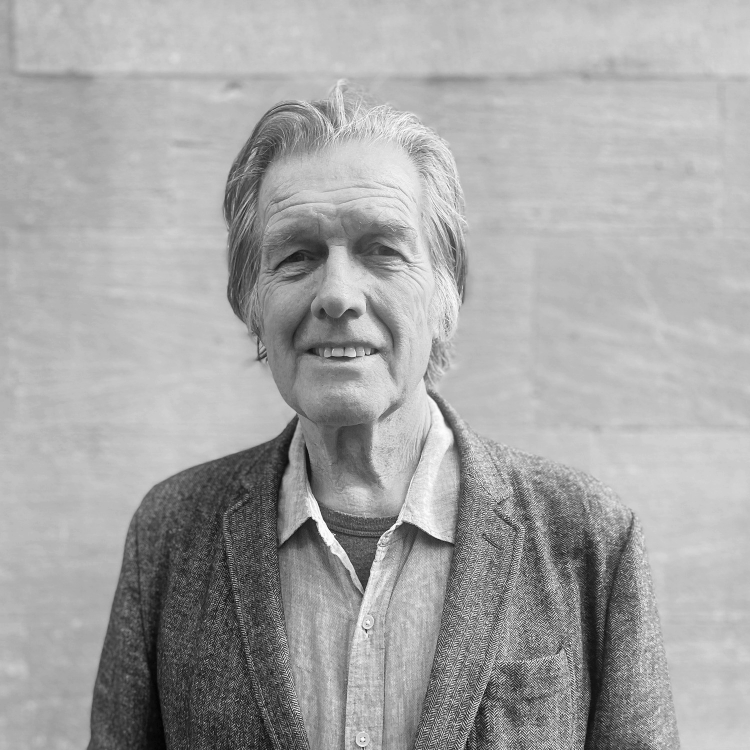
Prof. Alan Tomlinson
Emeritus Professor of Leisure Studies, University of Brighton UK. His research has covered the sphere of Sport and Leisure Cultures, crossing interdisciplinary boundaries in studies of the Olympics and the history and politics of FIFA, the world governing body of football. He has authored and co-authored around three dozen books, most recently What is FIFA For? (2026, Bristol University Press)
“X”: @AlanTomlinson1
Email: alangtomlinson@gmail.com
He grows old, he grows old
But clearly steals more time as years unfold [Adapted from The Love Song of J. Alfred Prufock], Courtesy of T.S. Eliot
The Spanish triumph over a nasty, niggling Argentina in the men’s World Cup Final restored a sense of European domination of the global game. For FIFA president Gianni Infantino this could undermine his rhetorical dreams that “the FIFA World Cup is a force for unity,” as he spluttered on an Instagram post during the men’s World Cup tournament. Infantino came into power in 2016 following a stint as General Secretary at UEFA, the European confederation affiliated with FIFA. In FIFA, he represents 211 national football associations that keep him in power as long as the cycles of funding keep pouring his way.
So, for the Swiss FIFA president it’s “unity” that counts. Ignore the teams that have packed up and gone home and apologies for the clashes between intense competitors. As Infantino claimed mid-tournament, “when a ball is rolling, billions of hearts beat as one. Humanity’s greatest gathering, this is the @fifaworldcup2026!”
But look more closely at Infantino’s words. We have no evidence at all that once a game kicks off the billons of consumers of the spectacle will feel as one; conversely, they’ll be cursing the opposing player, urging referees to give yellow or red cards to the opposition, roaring on their own teams, and slagging off the other side at any given opportunity. The “force for unity” claim is absurd. It’s more accurate to note that when the ball is rolling, the commercial partners of FIFA, global and local, are counting the billions of dollars that are generated by the tournament and congratulating FIFA as its coffers are spilling over—to the tune of $15 billion USD for this World Cup bonanza.
How can Infantino describe with any credibility that this tournament is, “Humanity’s greatest gathering”? It’s not really a gathering at all. It’s a fragmented, from time to time deeply hypocritical, money-making machine for FIFA. It is a construction of spectacle and commercialism, existing on the basis of global platforms maneuvered with skill and guile by the marketing specialists of FIFA along with sponsors and long-established partners, all keen to display their products and wares to vulnerable audiences across the globe.
The FIFA World Cup is as much a force for hostilities across the world as a “force for unity.” Whatever the bogus claims of its avatar-styled president, FIFA’s products, profits, and preposterous, projected commercial ambitions must be roundly denounced rather than revered.
Of course, this is Infantino’s baby; he will continue to dominate screen messages and platforms that FIFA creates for its top man. He hogs the highlights in the best seats in the big matches, easily spotted by camera men and women as the well-dressed middle-aged baldie chap who seems so often to be among people, yet alone. Perhaps he is planning how things might go in the 2030 World Cup. But here’s a question: should he by then still be in the FIFA presidential position?
Infantino seems to have been around for a long time since he took the presidency of FIFA in February 2016. FIFA’s rules say that a president can only have three terms of office, each term lasting 4 years, 12 years in all. So, 12 years on from February 2016 takes us to 2028—will it be time to go? 2028 will likely not be enough for Infantino. He aspires, for instance, to oversee the men’s World Cup of 2030, hosted by Spain, Portugal, and Morocco, with centenary celebration matches in Uruguay (1930 host and champion), Paraguay, and Argentina. How could Infantino not be in on the act for this still-growing phenomenon? A solution needed to be framed to justify his plans.
In December 2022, the avatar’s FIFA Council backed the view of FIFA’s Government, Audit and Compliance Committee, which announced that his term of service of 39 months between winning the Presidency at the Extraordinary Congress and being re-elected unopposed in 2019 doesn’t count as service after all; rather, his 12 years of service should start from 2019, not 2016, which would take him through to 2031. His redefined three terms of office, each of four years, keep him in his position from 2019-2031.
Infantino appears to be getting his way. But sometime, somewhere, some of the FIFA committee members, some of the sponsors even, alongside activist groups and others, could challenge the excesses of the Swiss. Infantino and his FIFA-based acolytes are protected in many ways by Switzerland’s financial regime; the IMF hails the Swiss financial system as “large, sophisticated, and of global importance.” Infantino sees the FIFA behemoth as a mighty player in that system. But FIFA’s man for all seasons, and his associates, are increasingly seen as colluding in, if not explicitly corrupting, a continuing mis-management of the global game.