
Dr. Cecilia Arregui Olivera
Assistant Professor at the Media and Journalism Studies Department, Aarhus University. Her research centers on conflict, news production, and media audiences in sports mega-events.
Email: ca@cc.au.dk
Website: https://www.au.dk/en/ca@cc.au.dk/
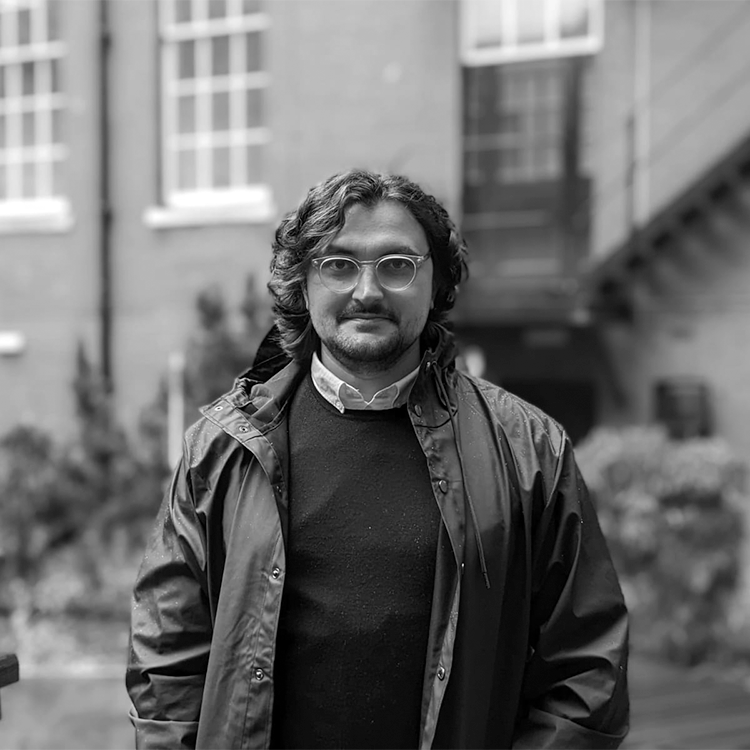
Dr. Vitaly Kazakov
AUFF and Marie Skłodowska-Curie Actions European Postdoctoral fellow at the Department of Media and Journalism Studies, Aarhus University. His research interests include politics and mediation of sport in multilingual, cross-cultural, comparative settings.
Email: vitaly.kazakov@cc.au.dk
Website: https://www.au.dk/en/vitaly.kazakov@cc.au.dk/

Dr. Kirsten Frandsen
Professor at the Media and Journalism Studies Department, Aarhus University. Published extensively on media and sport. PI on the project Soft ‘power play’ at the FIFA World Cup.
Email: imvkf@cc.au.dk
Website: https://www.au.dk/imvkf@cc.au.dk/
While the United States has taken center stage in international media as the primary host of the FIFA World Cup 2026, we focus here on mainstream media coverage in Canada and Mexico, the less visible co-hosts. A decade ago, the United Bid emphasized “global unity” and the historic ties between the three North American nations. Since then, President Donald Trump suggested Canada becomes the 51st state and threatened military intervention against Mexican drug cartels, manifesting alternative visions of continental political relationships. Against this geopolitically charged backdrop, we observed how collective identification and national identity were expressed in Mexican and Canadian media during the ten weeks leading up to the tournament.
Mainstream Mexican outlets published numerous daily World Cup articles, though many were brief and sparsely sourced. Legacy newspaper El Universal featured some in-depth analyses and opinion pieces. Broadcaster Televisa’s news division, N+, offered less frequent coverage, including commemorative content on coins or license plates, while TV Azteca led the charge on sports reporting, highlighting star players, injuries, and coaching decisions. Altogether, Mexican outlets primarily focused on the country’s role as a host. There were constant references to Mexico’s tournament hosting history in 1970 and 1986, with an overall tone of excitement and anticipation tempered by criticism of infrastructural challenges, delays, and security concerns. Political reporting primarily covered national and regional developments, including statements from officials and much focus on the multiple protests leading up to the opening match. Several unions and civil groups threatened boycotts to advance their political demands. In comparison, international politics received limited attention, but articles did highlight, for example, tensions between the U.S. and Iran and Gianni Infantino’s remarks.
In Canada, outlets like CBC, CTV, and The Globe and Mail published fewer but lengthier and more in-depth World Cup-related stories, focusing less on the sporting side of the event and more on the political, social, cultural, and economic contexts. While Canada has recently hosted the women’s and men’s under-20 FIFA World Cups and the Olympics, this tournament naturally prompted articles about its historic and flagship nature and its significance to the country. Stories about the iconic World Cup trophy touring across major Canadian cities, or a chance to showcase Canada’s growing interest and popularity of football emphasized the framing that Canadians can and should “be proud that this sport is ours.”
Outside the sports-focused reporting, pre-tournament media build-up delved into Canadian views on geopolitical tensions with the U.S. One story, featured by all three outlets, articulated concerns from local politicians, academics, and activists about the presence of ICE agents in Canadian cities ahead of the World Cup and fears this may cause among guests of the tournament, framing it as a threat to Canadian sovereignty. Even ostensibly apolitical topics like Canadian artists’ contributions to the tournament’s cultural program included references to political tension between and within co-hosting countries as manifested in the cultural sphere. Debates over Canadian identity and integrity featured on the news as the tournament progressed, addressing internal threats like Alberta’s separatist movement and external ones like U.S. annexation rhetoric while simultaneously framing the FIFA World Cup 2026 as a unifying event for Canada and its relations with its neighbors.
These overall differences in reporting stem from Mexico and Canada’s distinct media and sports systems. Canada boasts a state-supported, highly autonomous, and professionalized media, yet facing disruption from digital media and content creators. In Mexico, according to the 2025 Digital News Report, media remains highly commercial and dominated by a few major players, with journalists facing precarity and threats to their integrity. While football has long been central to Mexican national identity, bolstered by hosting the FIFA World Cup on two previous occasions, Canada’s football culture is more modest but has grown steadily, further spurred by the hosting of the Women’s World Cup in 2015.
However, important cornerstones of both countries’ national identities historically feature contrasting themselves vis-a-vis their dominant neighbor, the United States. In 2001, Dennis Sumara, Brent Davis, and Linda Laidlaw noted that “[w]hile Canadians can’t seem to agree on what they are, they have no trouble at all agreeing” they are not U.S. Americans. Claudio Lomnitz argues inDeep Mexico, Silent Mexico that external forces certainly play a role in identity formation. This dynamic is evident in World Cup-related coverage, where both Canada and Mexico adopt an ‘us vs. them’ narrative with the U.S. as the ‘other.’ For example, an article from TV Azteca referred to Mexico as the “ideal host,” highlighting the historic feat as the first country to host the tournament three times. Anthropologist Roger Magazine echoed this sentiment in a February 2026 episode of The FootPol Podcast, noting Mexican “envy,” “resentment,” and “discontent” over the U.S. taking center stage, while Mexicans view their country as a more fitting host given its deep football culture. Decisions, he noted, are often driven by “world power” rather than passion for the sport. In Canada, an article from CTV emphasized how they do not “accept co-operation with ICE” and do not want Canada “following in their [American] footsteps.” In sum, even with their editorial focus set on different issues, both Canadian and Mexican media seemed to have struck a balance between celebratory and a more serious, critical tone.