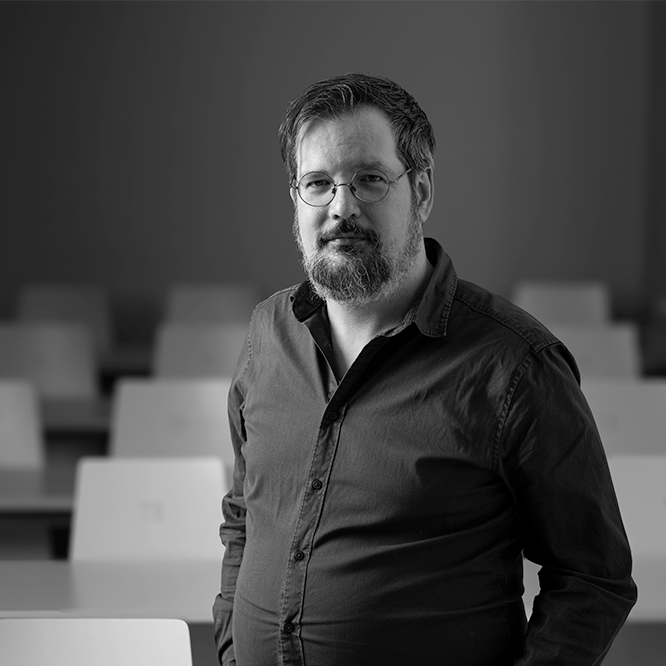
Dr. Tamás Dóczi
Associate professor at the Hungarian University of Sports Science, Budapest, Hungary. His research includes sport and globalization, the relationship of sport and identity, the role of sport in public diplomacy, and the media representation of athletes.
Email: doczi.tamas@tf.hu

Dr. Dunja Antunovic
Associate Professor of Sport Sociology at the School of Kinesiology at the University of Minnesota, USA. Her research focuses on the mediated visibility of women’s sports and on cross-national comparisons of international sport coverage.
Email: dunjaant@umn.edu
On November 16, 2025, at the last game of the group stages for World Cup qualification, Ireland scored a decisive goal against Hungary in the last minute of the game and won 3-2, leaving Hungarian players and fans stunned, as hopes had been high before the game that the 40-year wait for FIFA World Cup participation would be over.
The result sparked immediate debates. Over the previous 15 years, Viktor Orbán’s right-wing populist government poured substantial funds into football through various direct and indirect channels. The aim was multiple: qualification to major tournaments by the national team, Hungarian clubs reaching the group stages of European cups, a more competitive national league, improved facilities, increased attendance at league and national team games, hosting high-profile international events, and a strong network of football academies, producing high-level talent and top league players for export.
The state support of sports in general, and football in particular can also be marked by the launch of a public sports TV channel (M4 Sport) in 2015, and the nationalization of the daily sports newspaper, Nemzeti Sport in 2022. These outlets remained supportive of the government all through the 16 years, often comparing the previous, left-liberal government with Orbán’s right-wing populist regime in terms of the state subsidization of sports. Indeed, the share of (mainly elite) sport funding exceeded 2% of the annual budget between 2016 and 2020 and remained over 1.5% afterwards (the EU average remained below 1% for the period), and football was clearly the main beneficiary. Therefore, over the 16 years of the Orbán regime, football remained a politically symbolic terrain, where all the good and bad results became interpreted in various ways, especially because Orbán is admittedly an ardent football fan and the ways in which the sport was financed and developed seemed to be based on his personal preference, vision, and individual decisions.
Contrary to previous years, when the regime kept winning elections by great margins, in 2025, the political implications of the football failure became more pertinent, as a strong opposition party with a real chance to defeat the ruling party had emerged, and the 2026 elections were expected to be a closer call than ever. Under such circumstances, World Cup qualification or, at least, making it to the playoffs would have meant not only rational legitimation of the spendings on football, but a feel-good atmosphere much needed by the regime as well.
During the weeks that followed the Ireland game, serious efforts were made to explain the situation to the public, including multiple editorials in Nemzeti Sport by György Szöllősi, editor-in-chief and long-term fan of Orbán, and notably, a studio debate on M4 Sport dramatically titled, “Is there life after death?,” with the participation of a coach/former international player and the Prime Minister himself. Their claims were straightforward. The last-minute slip was a misfortune and had nothing to do with systemic issues in the sport. On the other hand, critics called for structural reforms and personal changes, claiming that the entire subculture was rotting from inside. So, when the final whistle was blown at the Ireland game, the uncomfortable question whether the state money spent on football was well spent, emerged on the public agenda.
In 2026, the months leading up to the parliamentary elections were intense, and the public discourse of sports did not remain intact. Nemzeti Sport openly promoted the petition for the future of Hungarian sport in support of the government and threatened that a new government would pull most of the funding and spend it on other sectors. The outcome of the election is well known: a landslide victory by the TISZA party, echoing in the newsrooms of major international media outlets.
The end of the story could not be more ironic. Although the UEFA Champions League final was hosted in Budapest, it was the new Prime Minister, Péter Magyar, who could sit in the VIP section, while Orbán was gazing on the game from a different part of the Puskás Arena. And, as he was on his way to the U.S. to watch the two semifinals and the final of the World Cup, on July 14, the new two-third parliament majority of the TISZA party amended the constitution in a way that he could never again return to power and MPs with 12 years of service would not be legible to run at the elections again. Parallel to this, ETO FC Győr, champions of Hungary, were relegated in the first round of the UEFA Champions League by losing to the champion of Iceland, but the editor-in-chief of Nemzeti Sport did not have to explain the loss, as he had been fired from his position a week before.
Now, whether the money spent on football was well spent still remains a question, even if some figures and results do tell a story. But, at least, the professional and the media discourse is liberated, and proper debates can begin, which might after all, help football people surpass the timeless declaration by Ferenc Puskás, “Little money, little football. Big money, big football.”