Dr. Unwana Samuel Akpan
lecturer in the Department of Journalism, Broadcasting and Media Studies at the University of Lagos, Nigeria. His research focuses on broadcast journalism, sport communication, and African Indigenous communication and media systems. He has published extensively in these fields, has been a Visiting Scholar at Howard University, and is Editor of Communication Review.
Dr. Chuka Onwumechili
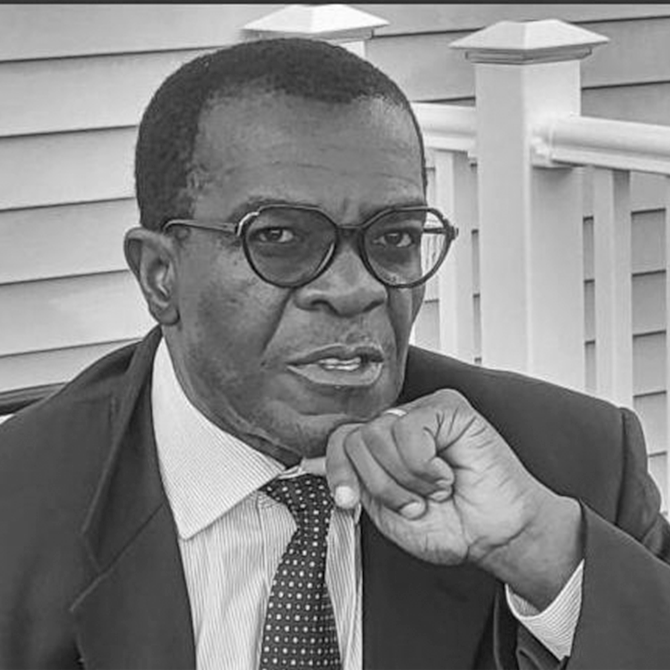
Professor of Communications at Howard University (USA) and Editor-in-Chief of the Howard Journal of Communications. He has authored more than 15 books, including Women’s Football in Africa and Sport Communication: An International Approach (2024), and has published extensively on sport communication, intercultural communication, and migration.
Nigeria is unarguably a football powerhouse in Africa. In fact, scholars like Onwumechili and Akpan have constantly argued that Nigeria lives and breathes football. The game commands a passion and loyalty that transcends politics, rabid religious and ethnic bigotry. The love Nigerians have for the game runs through the nation like a familiar river, nourishing conversations in village squares, markets, churches, and bars alike. When the FIFA 2026 World Cup arrives, Nigerian fans typically rally behind any African representative with pride and passion. But the 2026 tournament unfolding in the United States revealed a striking exception. When South Africa faced Mexico, Nigerians did not rally behind South Africa. Instead, they poured onto social media with biting humor, deep resentment, and a unified decision to support Mexico. Instead of continental solidarity, Nigerians both at home and abroad flooded their social media handles with unequivocal support for the Mexican side. The reason cuts deep, which is, the persistent and brutal xenophobic attacks against Nigerians and other African foreign nationals in South Africa.
The xenophobic attacks, which surged notably around 2019 with renewed ferocity in 2021, 2025, and 2026 have left deep scars. Nigerian business owners have been looted, students assaulted, and citizens murdered in places like Johannesburg and Pretoria. What makes the attacks more painful is historical memory. The Nigerian government and people stood firmly with South Africans during their struggle against apartheid. Many Nigerians feel that this debt of solidarity has been repaid with violence and ingratitude.
This piece does not merely report anger but systematically samples and analyses social media posts from Nigerian fans across Facebook to understand how football became a vehicle for political expression. The analysis draws on eleven Facebook posts and their comment threads to reveal patterns of collective resentment, ethnic pride, and the weaponization of sporting loyalty.
For instance, one Nigerian fan shared a meme of a Mexican fan laughing alongside the caption, “Even my ancestors are supporting Mexico today.” Another one said “I pray they don’t win a single match” +Ben Udechukwu, 2026). The next post featured a montage of South African xenophobic attacks with the text, “You burn our shops, we cheer your opponent. Fair trade.” A third user commented, “My father donated to the ANC in the 1980s. Now they call us drug dealers. Mexico all the way.” The comment threads reveal layered emotions. Some Nigerians expressed guilt at abandoning continental unity, but most responded with a firm position: football support is a luxury that respect must first earn. One particularly viral video showed a Nigerian fan wearing a Mexican jersey while waving the Nigerian flag, a symbol of strategic allegiance. A notable post compared the Nigerian government’s quiet diplomacy on xenophobia to the loud support for Bafana Bafana, asking, “Why should we cheer those who silence our government?” (Idowu, 2026).
Adams Omokhekhai captured the absolute refusal of solidarity by writing, “Even if South Africa play alone inside a stadium we NIGERIANS will support the stadium.” The logic is not about football quality but about punishing a nation perceived as ungrateful. Lukman Hussain added a pointed reminder of the violence that follows the final whistle: “After their next match, they will return to South Africa for the Xenophobia.” This comment implies that South African players and fans do not deserve sporting goodwill when their countrymen harm Nigerians back home.
Perhaps the most recurring theme in the comments is the satirical use of the phrase “taking our jobs.” Labake Ilori Akinyemi wrote, “We are leaving the JOB of supporting South African team at the World Cup to South Africans because we don’t want to take their JOBS.” This directly mocks the anti-immigrant sentiment prevalent in some South African communities.
What emerges from these comments is a coherent political statement wrapped in football banter. Nigerian fans have not forgotten the historical solidarity their country offered South Africa during apartheid. They have not forgotten the xenophobic attacks. And at the World Cup, they found a harmless but yet humiliating way to say: we remember. Also, the findings suggest that for many Nigerians, the football stadium has become a courtroom. The verdict is clear, which is, South Africa must feel the sting of sporting isolation before it confronts its xenophobia.
The theoretical explanation to this can be found in the Social Identity Theory perspective, and Collective Memory and Retributive Justice. Social Identity Theory helps explain how Nigerians reassert their ingroup identity by rejecting an outgroup (South Africa) even at the cost of continental solidarity. Collective Memory provides the historical contrast between past Nigerian sacrifice and present South African hostility.
This collective action is also gauged by Political Economy of Sport and Collective Action Theory. Political Economy of Sport allows us to see how labor migration, job competition, and national resource distribution shape football loyalties. Collective Action Theory explains how Nigerians coordinated their support for Mexico as a form of nonviolent protest. Together, these frameworks provide an analytical lens for understanding how a football match became a referendum on xenophobia. Together, these frameworks allow an analytical dissection of how a football match becomes a nonviolent site of referendum on xenophobia.