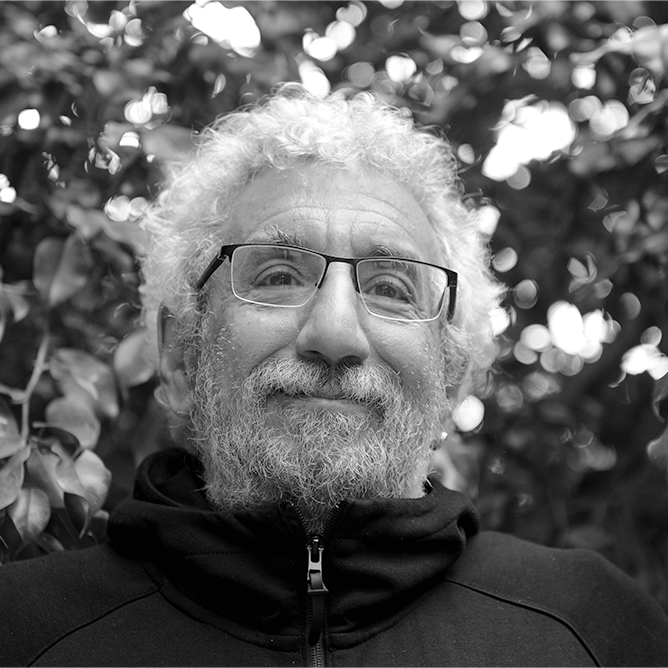
Dr. Pablo Alabarces
Professor of Popular Culture in the Faculty of Social Sciences at the University of Buenos Aires, Argentina, and a senior researcher at CONICET. His work explores popular music, popular cultures, and soccer culture, and he is widely regarded as one of the founding figures of Latin American sports sociology. He has published 18 books, among them Futbol and Patria.
Twitter: @palabarces
Email: palabarces@gmail.com
Instagram: @p.alabarces
Lionel Messi doesn’t speak. He (apparently) doesn’t read, he doesn’t write, he doesn’t watch movies (just TV series), he doesn’t visit art museums, he has no known musical tastes, and he has never once quoted a book or an author. In his rare interviews — incredibly rare, considering he is one of the most famous figures in global culture — he says nothing but platitudes. According to those few profiles, his life consists of playing soccer with his kids, video games, and drinking “wine with Sprite.” Even when talking about soccer, he can only produce clichés: “It was a very difficult match,” “The boys played very well,” “We need to play better.” Messi is mute. And boring, to boot.
For Messi, it seems there are no ethnicities or races, no social classes or gender, no powerful or weak, no dominant or dominated. Messi lives in a perfect world, where the only conflict is a harsh foul or a missed penalty. Messi was raised on a script written by the entertainment industry: The perfect star is the one who makes no enemies. And to achieve that, you must keep quiet.
Messi, at the same time, does not experience inequality. He has never been discriminated against, exploited or oppressed: before joining Barcelona at 14, he was that of a white, urban, middle-class child. To expect a political demand from him, even one showing solidarity with his fellow athletes, is impossible: The script does not allow for it. Messi is an individual coached to stay out of trouble.
Quite possibly, this absolute neutrality is precisely what has allowed him to become a global idol, revered by fans in every corner of the planet except one: Madrid, where they will never forgive him for playing for 21 years for their mortal enemy, Barcelona. That is the greatest conflict he has ever been dragged into, and it wasn’t even by his own choice: It was just the hand he was dealt — without it ever meaning taking a side on Catalan autonomy, a matter toward which he seemed entirely indifferent.
I couldn’t say for sure whether sports stars have overwhelmingly adopted this brand of careful neutrality, though it is highly likely. The exceptions are glaring, precisely because they are exceptional. Those who refuse neutrality usually do so because they have experienced some form of inequality or discrimination.
For example, consider Black European players, or Black players playing in Europe. As often happens with those playing in Argentina as well, they experience the massive, shameless racism of the crowds. Many of them rebel and speak out, denounce, protest, walk off the pitch, and demand change: Cameroonian star Samuel Eto’o, Athletic Bilbao’s captain Iñaki Williams, and striker Mario Balotelli in Italy are some of them.
It seems, then, that it is mostly those who experience inequality and oppression who raise their voices against injustice. This can expand into broader politics, as seen with Kylian Mbappé’s recent condemnations of both the French far right and advertisements for sports betting and junk food. Mbappé’s reasoning supports my argument: betting and cheap food wreak havoc in neighborhoods like the one where he grew up, and the far right is profoundly racist toward the children of immigrants. Once again, the experience is rooted in poverty and race.
The same goes for the Black Brazilian player Vinícius Jr., who plays for Real Madrid and reacts emphatically and publicly to every racist attack. He even forced FIFA to introduce a new rule, known as the “Vini rule,” which penalizes any player who covers their mouth while speaking to another. In February 2026, an opponent covered his mouth, clearly to insult him. Vinícius complained to the referee that the opponent had called him a “monkey,” though no action was taken on the pitch because the insult could not be heard. Later on, the Union of European Football Associations (UEFA) handed the player a six-match ban, taking the racist abuse as a given. The opponent was an Argentine playing for Portuguese side Benfica, who argued in his defense that he had used a homophobic slur rather than saying “monkey.” Homophobia, according to Gianluca Prestianni — the aggressor in question — was apparently less problematic than racism.
At this point in my argument and examples, it might seem as though political indifference or racism are inherently Argentine traits. It is worth remembering, then, that Diego Maradona is still remembered as a player and a public figure who was deeply committed politically. Similarly, Lisandro Martínez, a current player on the Argentine national team, has continuously championed his working-class roots, as well as his commitment to condemning the crimes of the Argentine dictatorship and his solidarity with human rights organizations. Messi’s “neutrality” is therefore not an ironclad law; players can escape it if their class experience or political consciousness allows them to do so.
This is not Messi’s case. It is not a matter of awareness or commitment, but of never having experienced difference and inequality. In that context, you can’t expect blood from a stone.