
Dr. Otávio Tavares
Full Professor in the Federal University of Espírito Santo. Head of the ARETE – Centre of Olympic Studies and Sport. He teaches and conducts research on sport sociology and Olympic Studies. He is the author of four books, 67 academic papers and 51 book chapters.
Email: otavio.silva@ufes.br

Bruno Malias Mendes
Master in Physical Education from the Graduate Program in Physical Education at the Federal University of Espírito Santo. He conducts research on the social impact of sport on vulnerable communities and on public policies for sport and leisure. He is also an international FIFA beach soccer instructor.
Email: bruno.malias@hotmail.com
Routine has returned to normal in Brazil. For a few weeks, however, it is interrupted every four years by the men’s FIFA World Cup. Homes, bars, and even workplaces adjust their schedules to follow the Brazilian national team’s matches. Streets decked out in green and yellow – the national colors – team jerseys, flags in windows, and a profusion of decorations create a festive atmosphere that transforms everyday life.
As social scientist Victor Turner observed, large-scale collective rituals create temporary experiences of belonging—a communitas—in which social differences are momentarily suspended around a common goal. It is well established that football and carnival in Brazil function as rituals through which society generates collective experiences of belonging. During the World Cup, in particular, the national team transforms into what the prominent Brazilian intellectual Nelson Rodrigues called the “fatherland in cleats”, an embodiment of the country in the form of a football team.
Banners, flags, and crowds gathering in public spaces to watch World Cup matches on giant screens are not unique to Brazil. They occur in many places around the world, particularly in countries with a deep passion for football, whose national teams are among the title favorites or both, creating that sense of communitas that will, sooner or later, come to an end. Yet, in this country, we can identify two different types of urban spaces that serve as gathering places for experiencing the sense of collective belonging that the World Cup tends to foster. On one side, the large central squares and avenues of the city. On the other, the neighborhood streets.
Almost every city has a traditional space for collective gatherings, whether for celebrations or protests. For example, the Plaza de Cibeles in Madrid, Times Square in New York, Cinelândia in Rio de Janeiro and the Obelisco in Buenos Aires. These spaces are generally located in central urban áreas, normally spaces of circulation and impersonality: the “non-places” described by the French sociologist Marc Augé. It is in these places that the collective experience of watching and cheering for one’s national team during the World Cup traditionally takes place bringing together people from various regions, transforming them into communities of the moment. However, when the game ends, the public space must return to what it was, a clean and organized space for its original urban functions.
On the other hand, neighborhood streets are spaces that are neither excessively private nor entirely alien. Places where community life can unfold and where, consequently, disruptions to daily routines are generally less tolerated. Yet, in Brazil, these are precisely places that are occupied and marked, serving as the most common stage for the materialization of that sense of belonging, of communitas,during the World Cup.
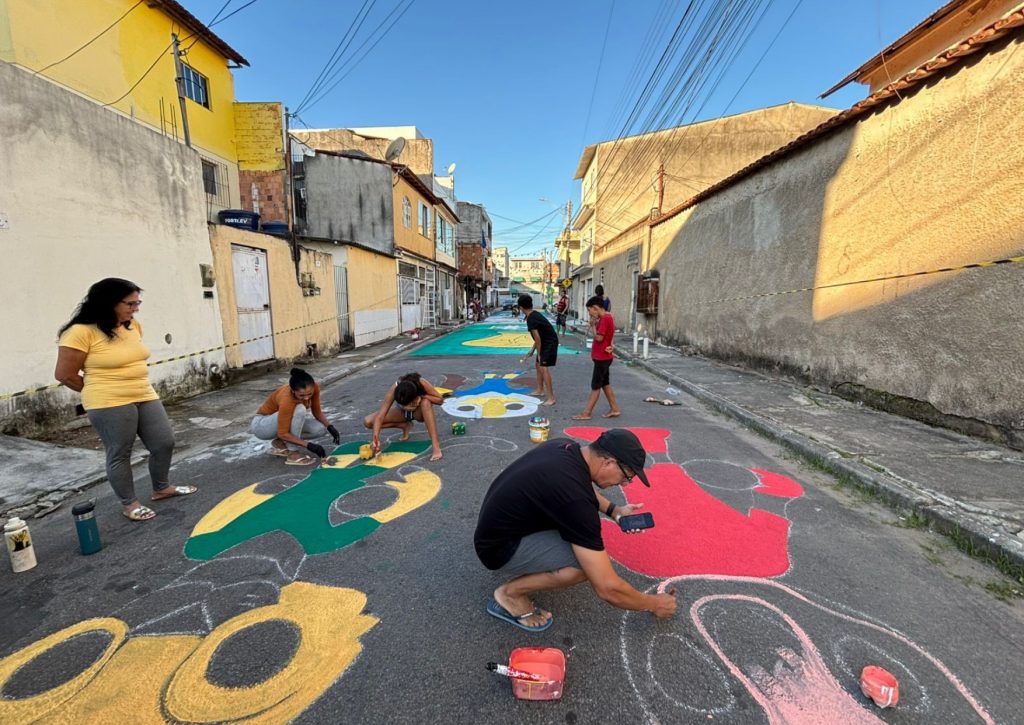
Unlike Fan Fests organized by public authorities or the private sector, the use of neighborhood streets as venues to celebrate the Brazilian national team stems from community action and neighborhood organization, efforts that begin before the tournament to decorate the street as beautifully as possible. This means decorating streets with bunting or shiny fabric streamers in the national colors, and painting walls and the pavement with images of players, the FIFA World Cup trophy, and many other drawings that celebrate the glories of Brazilian football and envision the coveted sixth title, which has once again been postponed.
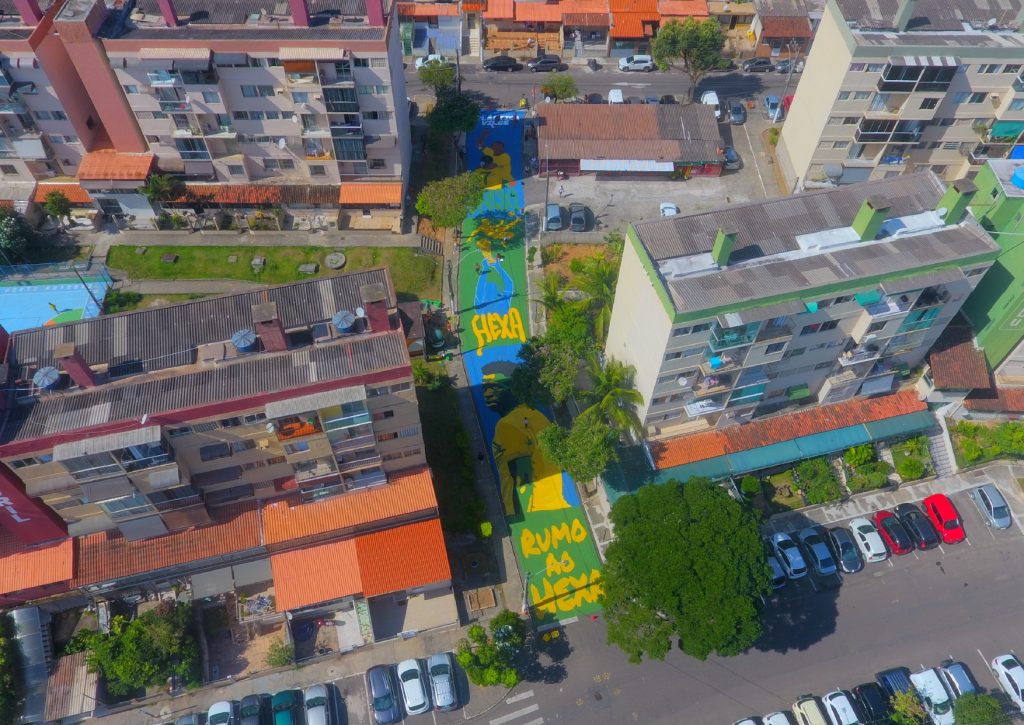
In many Brazilian cities this festive occupation of space leaves lasting marks and frequently, and in various ways, simply defies public authorities. Regardless of any legal authorization, decorations are hung from utility poles and streets are closed off, sometimes at night, sometimes on weekends, simply so that the asphalt and sidewalks can be painted over long stretches. Unlike the fan fests and their sponsors, the decorations are funded by the residents themselves, with occasional help from local businesses.
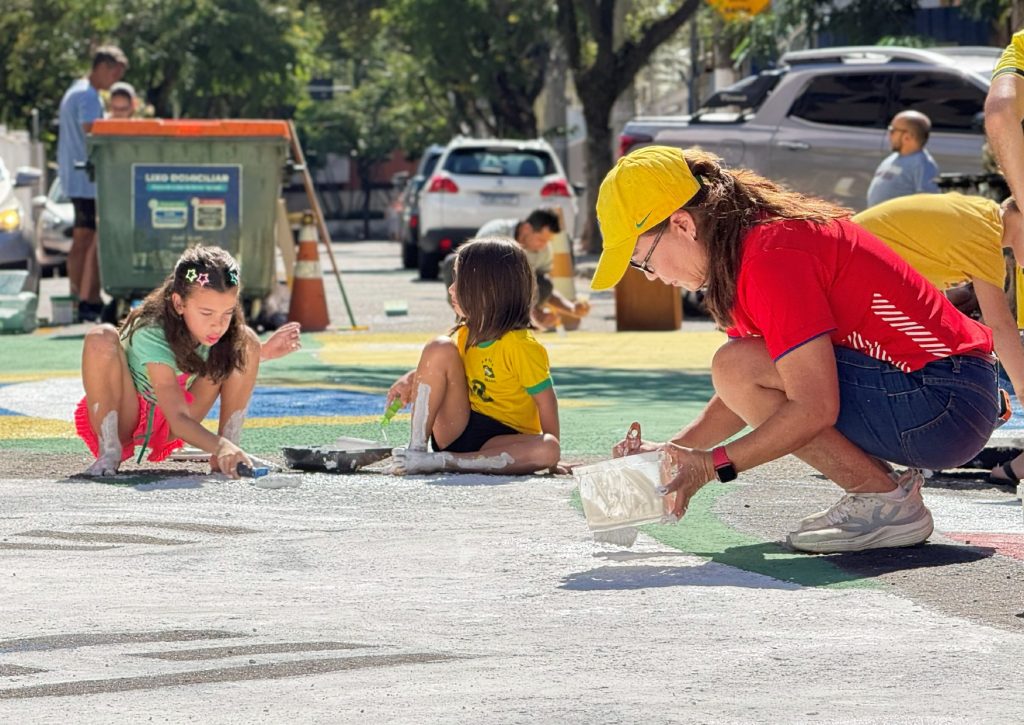
This tradition is so deeply rooted in the country that public authorities, even knowing they shouldn’t, gently pretend those interventions do not exist, neither interfering with nor suppressing them. Unlike the large urban spaces that revert to their original state after the World Cup, leaving little traces or memories of the installations that once gathered hundreds or thousands of people, the decorated neighborhood streets in Brazil remain after the tournament ends, regardless of the sporting outcome, serving as a daily reminder of a collective project and the celebration of a communitas for some time.